Client: Gelsenkirchen Economic Development Agency
Project period: since November 2025
The project in brief
Gelsenkirchen’s city center needs to transform itself: Vacancies, declining footfall, the withdrawal of national chain stores and the associated trading-down effect are putting the city under pressure. What’s more, Gelsenkirchen is one of the cities with the lowest purchasing power in Germany – and is located in the middle of the densely networked Ruhr region with intense competition from neighboring cities.
High time for action: We are supporting the Gelsenkirchen Economic Development Agency in the transformation of the city center. To this end, we are preparing a feasibility study, analyzing uses and vacancies, looking at individual micro-neighborhoods and involving citizens and key inner-city stakeholders.
The focus is on these strategic and operational tasks:
- Survey of retail, services and vacancies
- Mapping the city center according to uses, clusters and potentials
- Analysis of micro-neighborhoods within the city centre
- Online survey of citizens
- Developing a city center profile
- Derivation of target groups, fields of action and measures
Our goal is a strategically managed transformation process that prioritizes concrete measures and opens up new perspectives for Gelsenkirchen’s city centre.
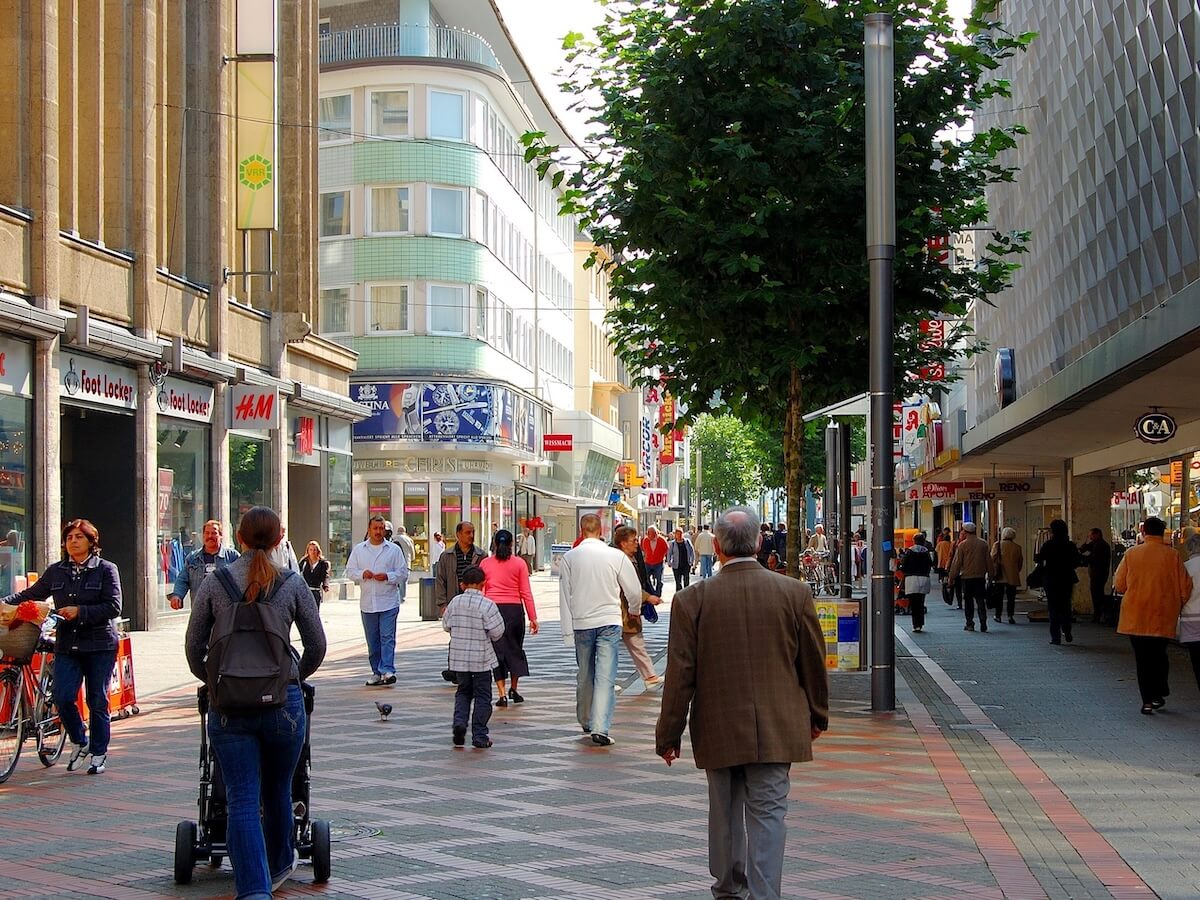
The following applies to Gelsenkirchen-City: There is no such thing as “the” city center, but rather micro-districts that must be considered individually – this also applies to the central Bahnhofstraße with its pedestrian zone
Task and background
A city under pressure to act
The main center of Gelsenkirchen-City is suffering from structural changes. Large-scale retail properties and smaller business units are vacant. The quality of the offering is declining, national chain stores are pulling out and footfall is falling.
In addition, the city center area is large – and at the same time fragmented: around Heinrich-König-Platz, different questions arise than in Bahnhofstrasse with its pedestrian zone or in areas with visible vacancies. This is exactly where we come in: We examine the city center not in general terms, but according to micro-quarters – and derive specific measures from this.
High competition in the metropolitan area
Gelsenkirchen is located in the densely populated conurbation of the Ruhr area. For the city center, this means that it competes with strong shopping, leisure and recreational areas in the immediate vicinity.
We ask ourselves the following questions in the project:
- What functions does the city currently perform?
- Which uses are missing?
- Which micro-neighborhoods offer particular opportunities?
- Which target groups can be addressed more strongly in future?
- And: What measures can realistically be implemented – here in Gelsenkirchen with the available resources and potential?
Our way of working
Map city centre, record retail trade
We start the project with a close look at the reality in Gelsenkirchen-City and consider location by location: Where are there gaps in the offer? Which locations need a new function?
To this end, we survey retail, services, vacancies, temporary uses and new openings in the defined city center area. We map the results and evaluate them according to usage clusters. This creates a reliable picture of which spaces are sustainable, which are under pressure and where new impetus for city center development can be applied.
Micro-neighborhoods instead of a blanket city center strategy
From the inventory, we determine which parts of the city need to be examined more closely in order to develop concrete measures for these micro-neighborhoods.
To do this, we examine each micro-neighborhood:
- Characteristic uses and gaps in supply
- Vacancies and opportunities for subsequent use
- Quality of stay and first floor effect
Our experience shows that blanket strategies or retail concepts fail at the latest because of the different functions and characteristics of the city centre sub-areas. That is why we rely on the concept of micro-neighborhoods.
Until mid-May 2026: Participation of citizens and stakeholders
Parallel to the analysis, we involve the people who use, manage or help shape Gelsenkirchen City. This includes citizens, property owners, retailers, service providers, administration, politicians and other inner-city stakeholders.
We use formats such as:
- Individual discussions with relevant stakeholders
- Digital citizen survey (April to May 2026)
- Workshops on strategy and implementation
- Steering group
Participation provides more than just opinions and moods. It shows which places are avoided or appreciated, what is expected of the city, where conflicts arise and which stakeholders are willing to take responsibility. These findings flow directly into the profile, fields of action and measures.
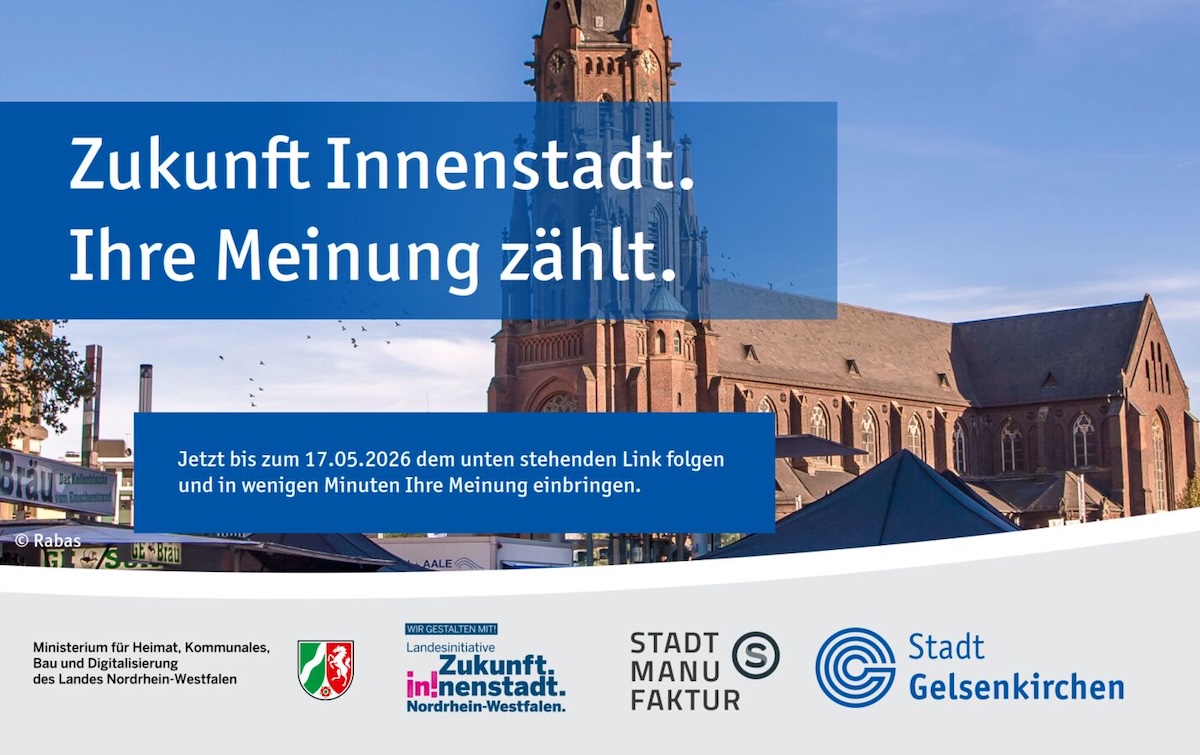
Citizens were able to take part in the survey on Gelsenkirchen’s city center until mid-May 2026 © mitmachen.gelsenkirchen.de/transformation-innenstadt
From June 2026: Develop city center profile
Once the citizen survey has been completed and evaluated, we will combine analysis, mapping and participation. From this, we will develop a profile for Gelsenkirchen-City.
This profile answers: Which strengths are actually available? Which target groups can realistically be reached? What functions can the city take on in the future? And what contribution do the individual micro-neighborhoods make to the transformation?
We summarize the results:
- a realistic inner city profile
- relevant target groups (target group mapping)
- spatial focal points
- strategic fields of action
- concrete recommendations for action
The profile becomes the basis for communication, prioritization and the next decisions in the transformation process.
By summer 2026: develop operational measures
Many inner city processes remain at the level of guiding principles for too long. Our aspiration is different: measures must match the available resources, responsibilities and areas.
We therefore evaluate the approaches we develop according to their impact and feasibility: What can generate frequency or visibility in the short term? Where do longer preparations need to be made? What measures do owners, administrators and others need?
At the end of the project we deliver:
- Prioritized matrix of measures
- Action profiles
- Clear implementation steps with responsibilities
- Communication materials for the process
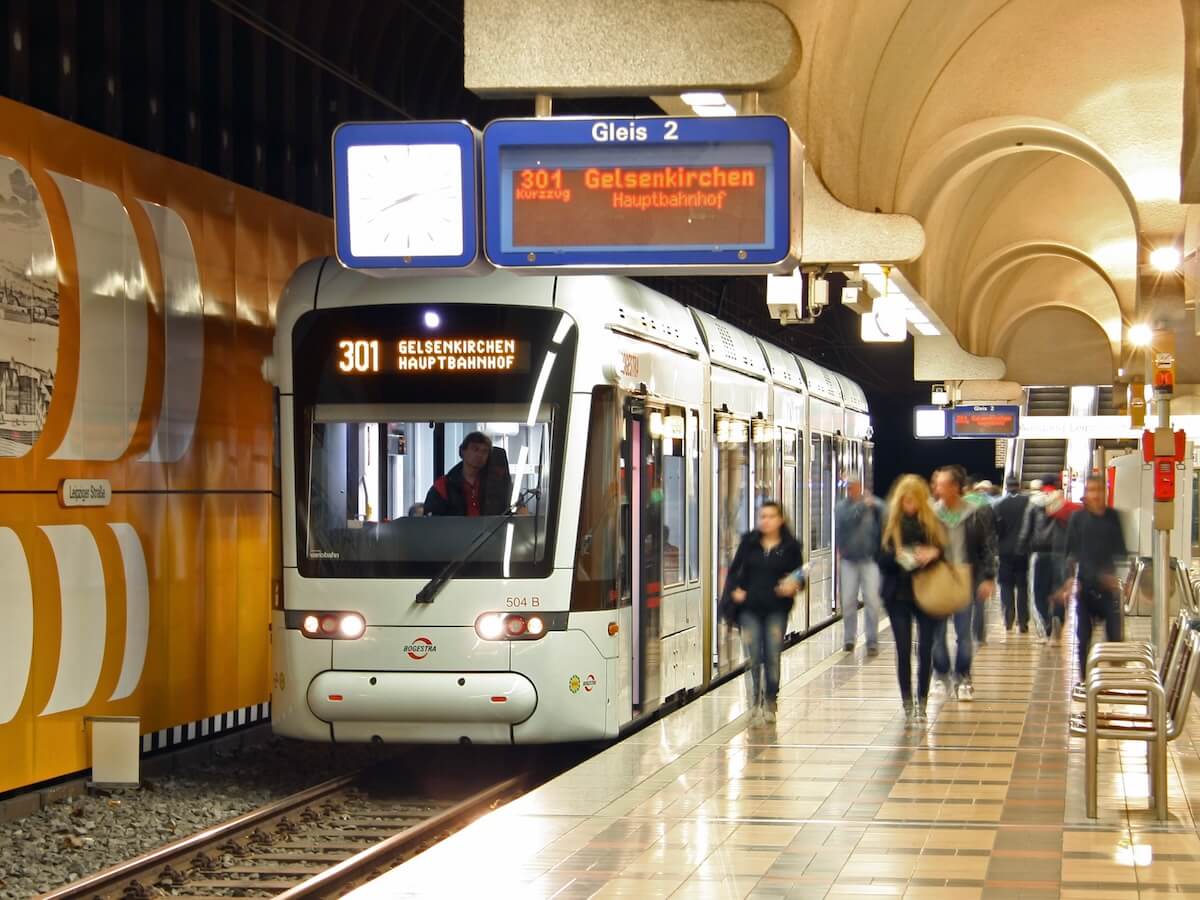
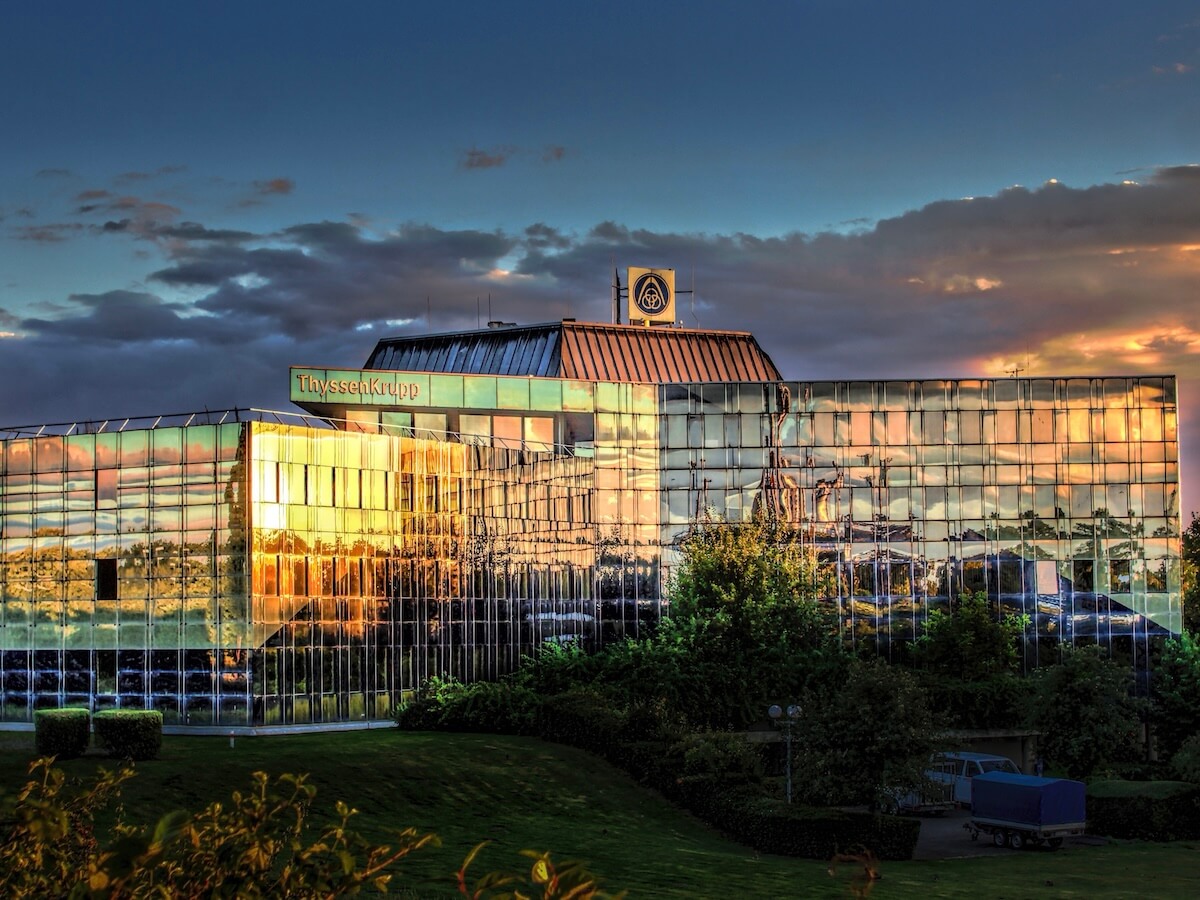
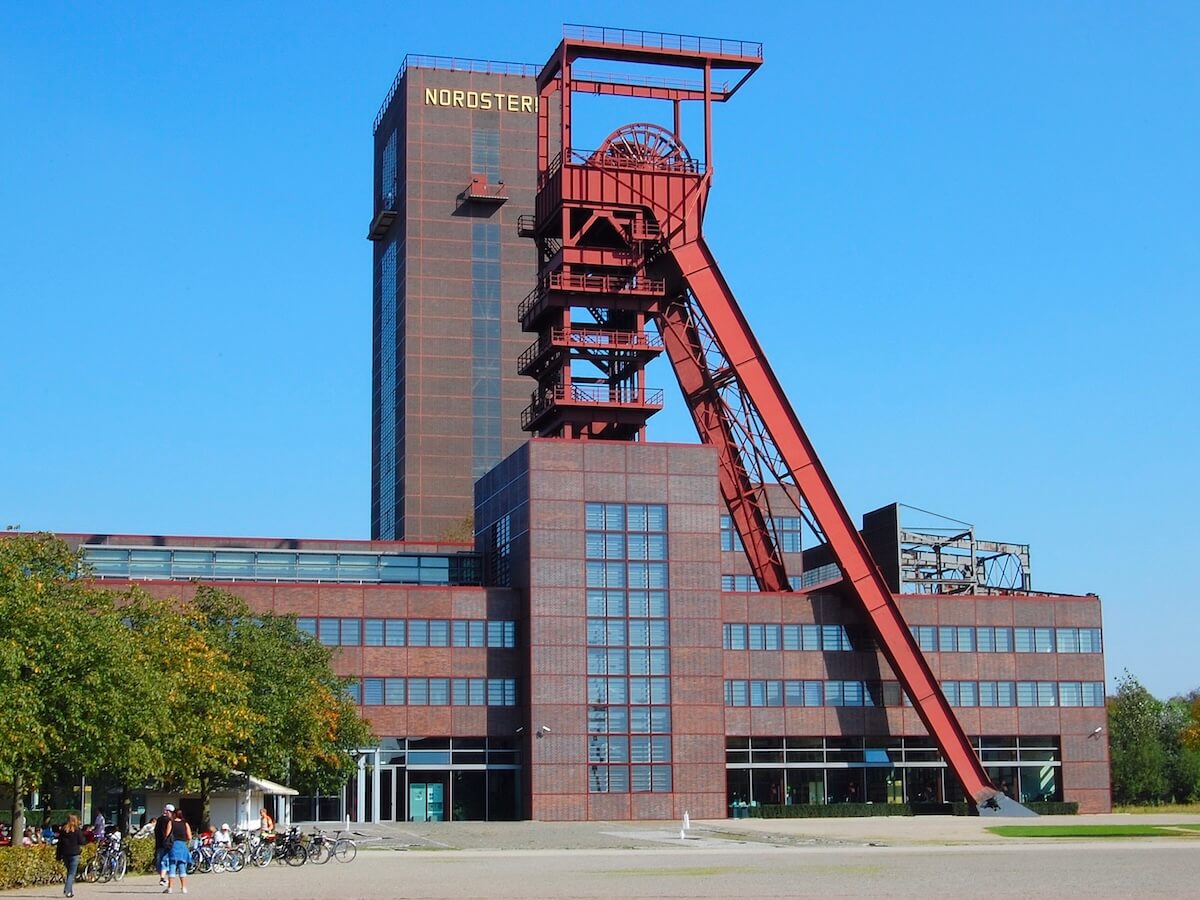
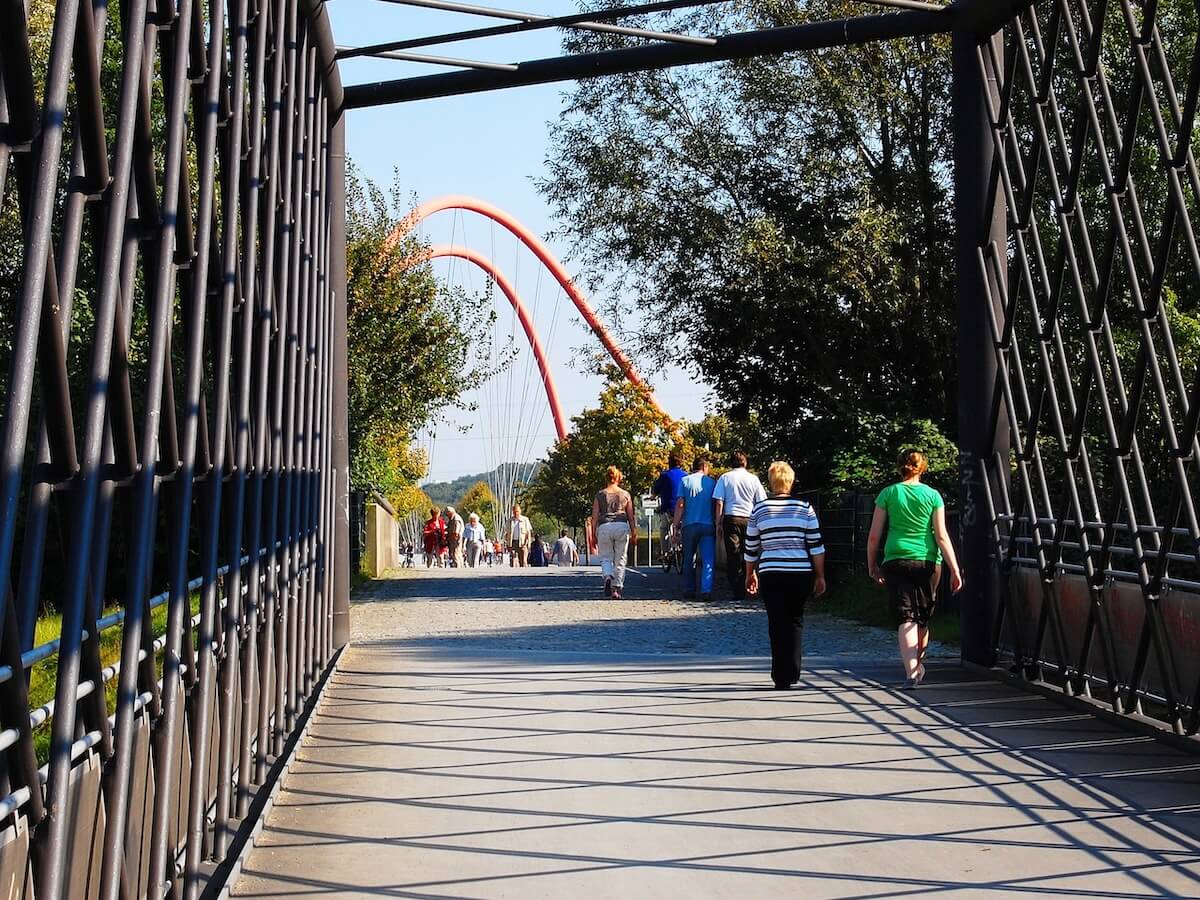
Impressions from Gelsenkirchen: The train station in the city center, to the west and east of the city, the Ruhr area with ThyssenKrupp and the former colliery tower in Nordsternpark
The current status
The project is currently in the participation phase: the citizen survey on Gelsenkirchen’s city center ran until May 17. We are currently evaluating this and combining it with the survey, mapping and stakeholder participation. From this, we develop the profile and the transformation concept including fields of action and operational measures for Gelsenkirchen’s city center.
Photos: Unsplash, Jörg Möller from Pixabay
Reporting on the project
Ideas and wishes wanted: What should Gelsenkirchen’s city center look like in the future? – waz.de – April 22, 2026
Press Release from the City of Gelsenkirchen Regarding the Online Survey – April 22, 2026