CONTENT
- Child and youth participation: Involve, listen, take seriously
- Participation as a duty and an opportunity for future-oriented decisions
- Methodology, topics and formats: Genuine co-design needs appreciative spaces
- Interview with Lena Stelling: “Participation is self-efficacy”
- Strong together: partners in participation
- Conclusion: Anchoring participation in the long term
Child and youth participation: Involve, listen, take seriously
An afternoon in early summer. On a long table in the town hall are colorful pens, post-its, small Lego bricks, tablet PCs and a large urban planning map. Three primary school children are standing in front of it, urgently explaining how they envision “their” playground: “There should be a climbing frame – and a roofed hut here under the tree!”
At another table, a ninth grader uses his tablet to explain how he would redesign the bus stop in his neighborhood. Workshop leaders listen attentively, ask questions and jot down ideas. This is a scene that shows what this is all about: children and young people help shape their city – and are taken seriously.
Abstract:
Isabell Köster thinks: Children and young people are not onlookers to urban development, but creative makers of the city and its future. With age-appropriate participation formats, cities and municipalities can create spaces in which young voices are heard – and real participation is possible.
The strategic consultant reports on forms and formats of child and youth participation – and talks to expert Lena Stelling about success factors and tools.
Participation as a duty and an opportunity for future-oriented decisions
The participation of children and young people is more than just a friendly offer – it is a guaranteed right, firmly anchored in the UN Convention on the Rights of the Child, and has been monitored by the German Institute for Human Rights since 2015.
Article 12 of the UN Convention on the Rights of the Child (abridged)
(1) Children have the right to express their opinions freely in all matters affecting them – and these must be taken into account in accordance with their age and maturity.
(2) To this end, they must be given a hearing in all relevant proceedings, either directly or through suitable representation.
Source: Unicef
Failure to comply with Article 12 of the UN Convention on the Rights of the Child does not lead to legal penalties, but increasingly to political and diplomatic pressure:
More and more funding bodies are linking their grants to the demonstrable participation of young people and many municipalities are proactively including child and youth participation in their calls for proposals – as an expression of a “genuine” and contemporary understanding of democracy: Away from paternalistic “deciding for children” towards a partnership-based “shaping with children”.
A study by the Deutsches Kinderhilfswerk from 2024 shows: A diverse participation landscape has been established – from children’s and youth committees to legal structures that ensure participation. With the Child Participation Assessment Tool (CPAT) countries like Germany can evaluate their measures for child and youth participation.
Methodology, topics and formats: Genuine co-design needs appreciative spaces
The participation of children and young people is also always in demand in our place branding and urban development projects: this is why we regularly design and moderate participation formats that not only “involve” young people, but also activate and empower them. Let’s take a look at the methodology, topics and formats of participation.
Methods of child and youth participation
The prerequisite for genuine participation: Each format creates protected, appreciative spaces in which the realities of the young participants’ lives are taken seriously. Our methods are dialogical and playful-creative, always geared towards really relevant topics and adapted to the age of the participants. We also attach particular importance to social and cultural diversity and (often “en passant”) the the promotion of democratic skills.
In our experience, processes are particularly successful when children and young people are addressed in a language that they understand. It must be clear to them why their opinion is important, because nothing is more demotivating in the long term than false promises and disappointed expectations. That’s why we communicate transparently from the outset and are aware of this responsibility.
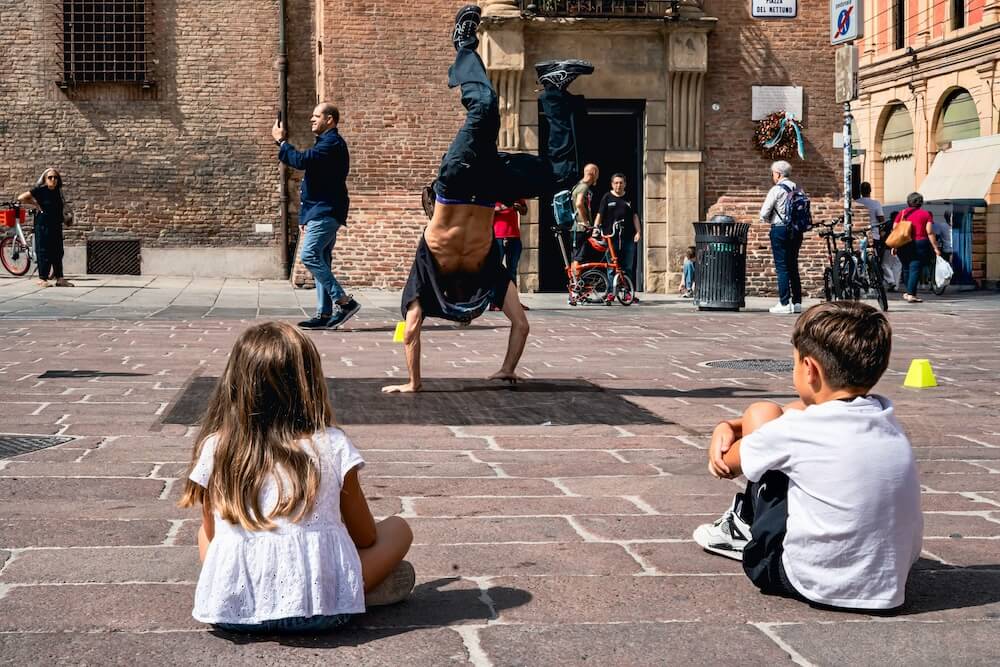
Seeing the city – through the eyes of children and young people: Participation formats give young people a voice and creative power
Possible topics – from playgrounds to city festivals
The range of topics in which children and young people can have a say and help shape is wide – and ranges from very specific everyday issues to city-wide projects.
District development
Whether it’s redesigning a playground, planning safe routes to school or greening squares and streets: Young people know their surroundings from the perspective of daily use. They can precisely identify where there are danger spots, where meeting places are missing or how open spaces could be made more attractive. They also contribute valuable ideas to larger projects such as the planning of climate-resilient green spaces or the redesign of traffic routes.
School environment
Children and young people spend a large part of their day at school. When designing playgrounds, learning spaces or recreational areas, it is not just about functionality, but also about creating feel-good places that encourage encounters, movement and creativity. Their suggestions are based on direct experience – and are therefore often particularly practical.
Culture and place marketing
From youth culture festivals and street art projects to activities in public spaces: when young people actively help to shape culture, formats are created that authentically reflect the world in which they live. In image campaigns or events that present the city to the outside world, children and young people also provide impulses that can reach and inspire their generation.
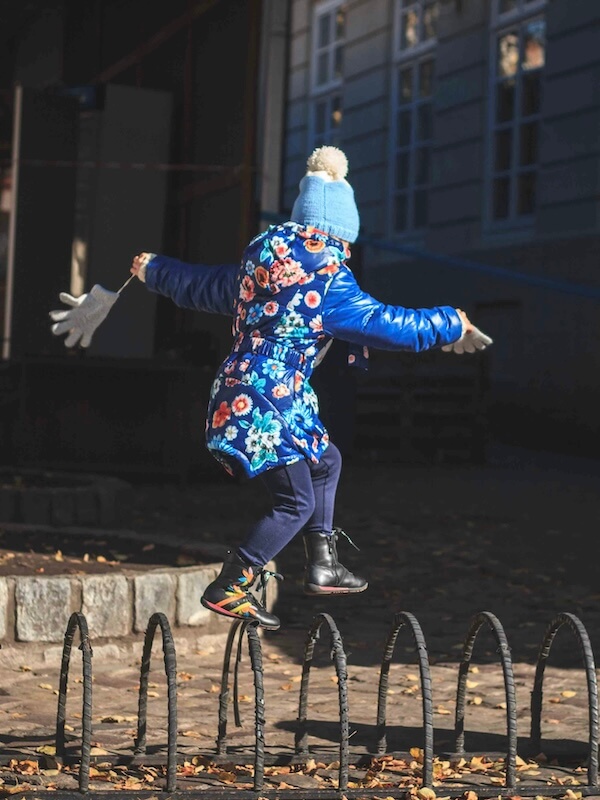
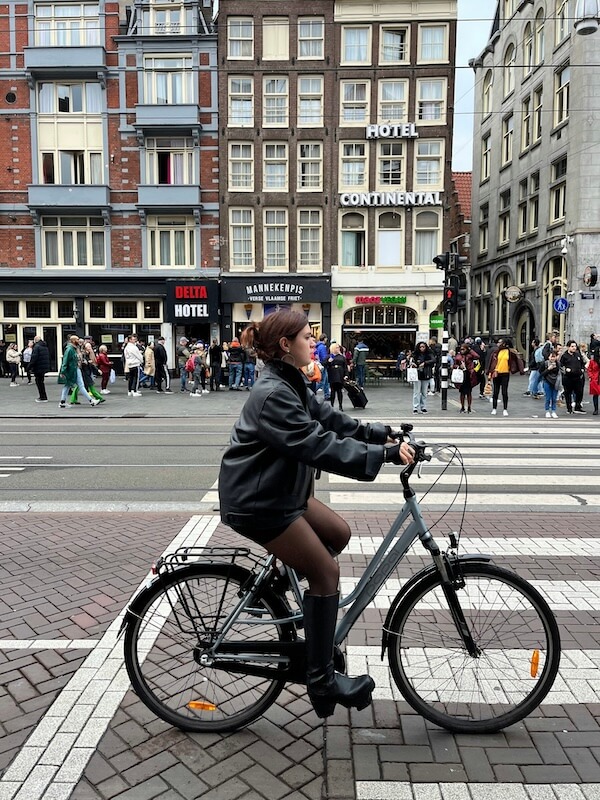
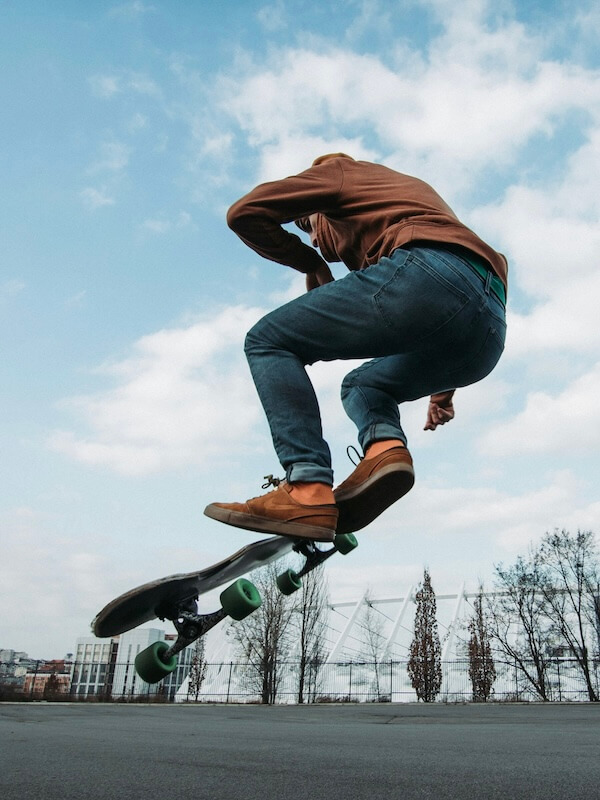
For children and young people, the city is a place for development, growth and movement. They have the right to play an active role in shaping it
Forms and examples of child and youth participation
Children are not small adults – and young people are not a homogeneous group. Instead, the mindset, forms of expression, interests and framework conditions of young people differ depending on location and age group. For a rough approximation, we distinguish below between child participation and youth participation.
Children’s participation – playful and creative
Children up to the age of 12 live more in the here and now, often think concretely and vividly and need tangible, manageable tasks. They react directly to moods, are spontaneous and can be activated easily using playful methods. Visual aids, creative building, painting or stories are particularly suitable for making their ideas visible. Time sequences need to be short and varied – and the fun factor plays a major role in keeping engagement alive.
Popular forms of child participation are: Creative workshops, district detectives, “future walks” as well as building and painting activities in elementary school, which stimulate the imagination and make concrete wishes visible.
Youth participation – concrete and flexible
Young people between the ages of 12 and 18 often have a greater awareness of social contexts, think more abstractly and can process more complex topics. They want to be taken seriously, express their opinions clearly and see concrete opportunities to exert influence. Digital tools, social media formats, topic-related project work or debates fit in well with their world.
At the same time, young people differ greatly in terms of their interests, social background and motivation – which is why we need flexible formats, that encourage personal responsibility but also offer clear structures.
Youth participation often relies on: Idea sprints, deep dives on topics such as mobility, climate protection or digitalization, digital participation platforms as well as photo and video projects with social media elements.
Digital formats and gamification – yes or no?
Interactive maps, online surveys and gamification approaches pick up children and young people where they spend a lot of their time anyway – in the digital space. Digital formats not only enable location-independent participation , but also a quick, playful approach to complex topics. Therefore, a clear yes to digital formats and gamification, but at best in combination with analog offers and real encounters.
Interview with Lena Stelling: “Participation is self-efficacy”
Speaking of partners: In our projects, we like to work with experts who contribute their skills and ideas. One of them is Lena Stelling. As Managing Director of PLING Kollektiv, she advises cities and municipalities on child and youth participation and democracy education. In this interview, I asked her about her experiences and her favorite tools.
Interview with an expert
Lena Stelling is the founder and managing director of PLING Kollektiv für politische Bildung. She works on democracy and education projects and as a municipal consultant for child and youth participation.
We are curious: Which participation projects do you particularly remember – and why?
Lena Stelling: I’m thinking of three types of projects. The first involved the participation of a school class in autonomous driving on public transport. In other words, buses and the like that no longer have a driver. The task was very specific and understandable and the results of the participation flowed directly into the project. For example, a common set of rules was drawn up.
I also thought a workshop with young people with physical and mental disabilities was great. The workshop was about their right to participation. I found the collaboration with the participatory architecture center Urbaneo and the Hamburg parents’ association Leben mit Behinderung particularly inspiring. It was a great experience to bring together expertise from many sides instead of planning everything alone.
But I also like projects that are completely free. In other words, when children and young people start an action themselves. For example, a youth group in Altona wanted to organize an event to draw attention to the wishes of their generation. We accompanied them from the idea to the event so that they could freely and competently implement what they had planned.
What characterizes successful child and youth participation projects?
Lena Stelling: Definitely, good preparation. It is important to define the framework in concrete terms: What should and can be achieved? Who is the target group? What I also like about the projects above is the high level of self-efficacy. The children and young people not only had a result, but also the feeling that they had really created something of their own.
What should not happen under any circumstances when cities and municipalities involve young people?
Lena Stelling: It is particularly bad to raise expectations that the participation process or the project cannot fulfill. This is another reason why it is important to communicate transparently what is at stake, what is possible and what is not. Furthermore, those responsible must not have higher expectations of young people than they do of adults. However, I come across this phenomenon time and again: children and young people are often expected to show more commitment and independence in participation processes than adults.
What are your favorite tools for child and youth participation?
Lena Stelling: I really like to use visualizations. They help almost everyone to imagine things well and plan them in concrete terms. In workshops, I also use classic methods such as painting, handicrafts or Lego. TaskCardsis a really cool digital tool for planning and documenting participation processes . I can use it to create timelines, collect content, link documents and websites, share photos and more.

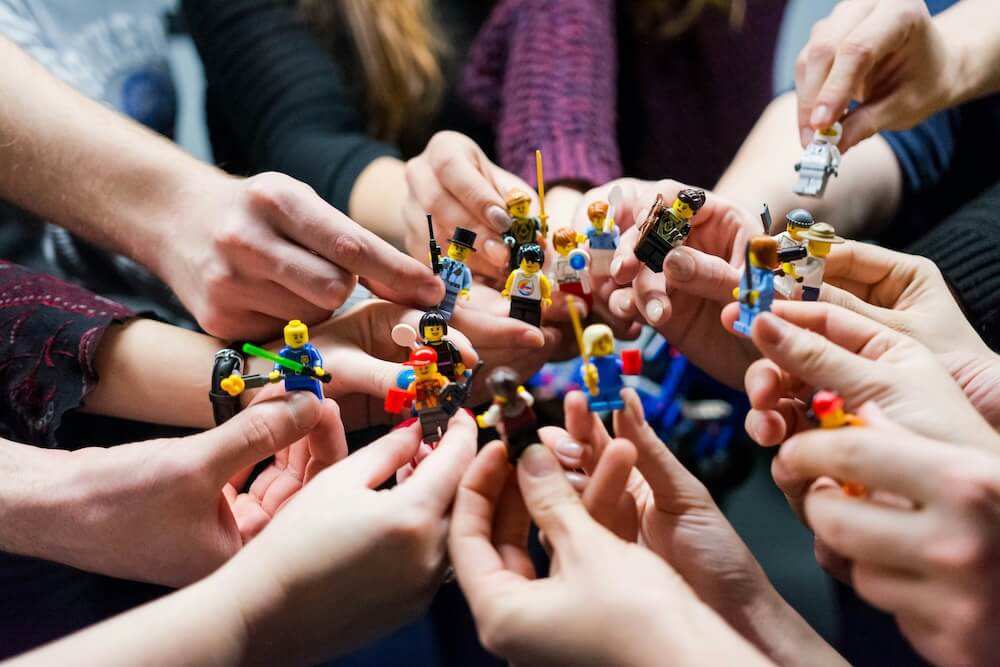
Methodology in miniature: Lego bricks and Lego figures help to visualize ideas of the city
Strong together: partners in participation
Lena Stelling’s experience shows: Child and youth participation needs a strong network. Because together with partners from education, culture and society, better, age-appropriate formats can be developed that not only enable participation, but also have a lasting impact. In addition, educational and cultural institutions in particular give us the most direct access to young people.
The partners in child and youth participation include:
- Schools
- Youth centers
- Student representatives
- Associations, cultural and educational institutions
- City marketing organizations
- local companies
- Creative industries
- Institutions for inclusion, integration and the environment
Shaping the city together: Child and youth participation is best organized with strong partners
Conclusion: Anchoring participation in the long term
Participation of children and young people is not a short-term action, but a continuous process. Participation is often tested on an ad hoc basis. Based on these projects, cities and municipalities should develop child and youth participation into a fixed component of urban development . After all, the city of tomorrow is being built today – with all generations.
Isabell Köster
is a project manager specialising in strategic narratives and the cultural industry. Isabell likes to spend her free time swimming - preferably outdoors