CEO Circle “Medium-sized Cities”

Information and review of the 4th CEO Circle “Medium-sized Cities” on April 22 and 23, 2026 in Tegernsee

Success factors in place branding – between aspiration and reality

The 4th CEO Circle “Medium-sized Cities” at Lake Tegernsee focused on the question of what makes place branding effective today – between high expectations, scarce resources and complex municipal reality. To this end, we focused on four success factors: smart communication, strong alliances, resilient structures and reliable financing.

In addition to professional impulses and moderated discussions, the CEO Circle once again offered plenty of space for open exchange and work on specific challenges from our cities.

An event organized by:
Logo of Stadtmanufaktur GmbH

In cooperation with:

When?

Start:
Wednesday, April 22 from 6 p.m.

End:
Thursday, April 23 at 5 p.m.

Where?

Hotel and conference venue:
Caro & Selig

Restaurant for our dinner:
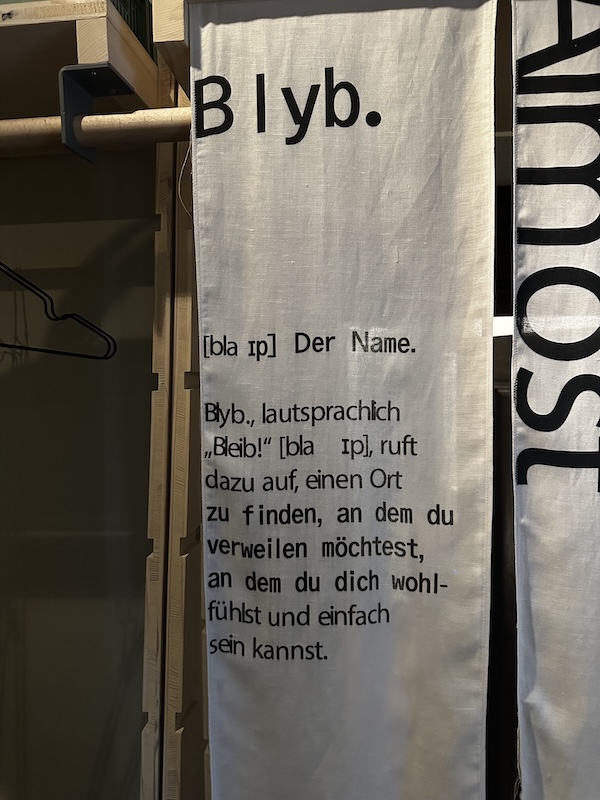
Blyb. Restaurant

Who?

Decision-makers from DACH cities with fewer than 100,000 inhabitants

Host town:
Tegernsee Valley Tourism GmbH

The highlights at a glance

April 22, 2026

Success through communication

“Almost there” – finishing is the wrong plan

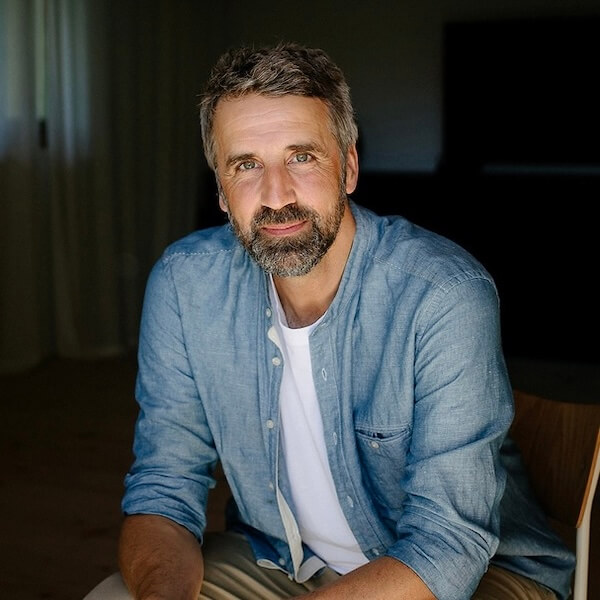
Impulse from Floko Ziebert
Chairman of the TTT Tourism Advisory Board and hotelier

Floko Zibert understands places and organizations as a permanent process: development, change and incompleteness are not defects, but prerequisites for relevance. Stagnation occurs where people believe they are finished.
For Ziebert, authenticity is not a marketing term, but an anchor of trust in uncertain times:

  • Especially in the face of social uncertainty (war, AI, fear of the future), people need orientation.
  • Ziebert’s consequence: not just showing the “good”, but making contradictions visible, enabling real encounters.
  • The “moment of truth” arises precisely where aspiration and reality honestly meet.

For Zibert, communication is not an end in itself, but strategically curated:

  • Not everything is actively communicated (e.g. educational and democratic work in the Blyb, he does not want to be accused of “fig leaf communication”).
  • Attitude: do first, then speak. Goal: Ensure credibility instead of generating attention at all costs.

Ziebert’s actions are determined by the question: “How do we want to be together as a society?”

  • Especially against the background of the Nazi past, he sees the Blyb as a place of active social responsibility.
  • The starting point is also the context of Lake Tegernsee: a wealthy region with a lot of influence, capital and creative power.

Zibert’s aim is to shake people up and encourage them to be more progressive.

Floko Ziebert: “I had to become a hotelier to create a place you can’t go past.”

April 23, 2026

Success through alliances

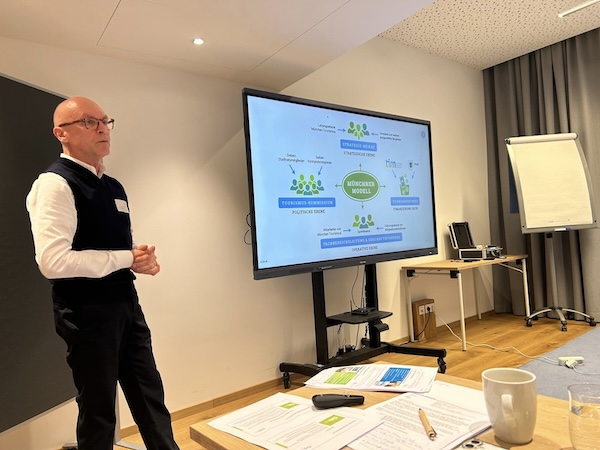
Presentation by Michael Höflich
Managing Director of the Munich Tourism Initiative (TIM)

The Tourismus Initiative München (TIM) was founded in 2012 as a result of a specific pressure to act and today brings together over 200 companies from various sectors of tourism and the city economy.

In his presentation, Managing Director Michael Höflich names his success factors: 

TIM brings together the relevant players from the hotel, retail, tourism and business sectors. This creates a common basis for action instead of individual interests.

As part of the “Munich Model”, TIM works closely with the city and at the same time acts as an independent partner to the business community.

TIM sees itself not only as a network, but also as an active co-creator:

  • Participation in strategic processes
  • Involvement in place marketing
  • Support with product development and marketing

The initiative is characterized by rapid and visible implementation, e.g:

  • Campaigns to revitalize tourism during the Corona period
  • Short-term alliance formation (e.g. “Pro Olympia”) with joint financing and communication

With an office, a board and clearly defined structures, TIM is organizationally stable and capable of working in the long term.

  • Financing: 50:50 – TIM collects membership fees, Munich Tourism adds 50 percent.
  • Total budget: 650-700,000 €

At the moment, “München Tourismus” is in a tight financial situation: positions are not being filled, but funds are still being collected.

Reasoning: These are investments and not expenses. The expenditure is worthwhile, attracts tourists and guests to Munich and contributes to value creation.

TIM acts as a mouthpiece for the industry and strengthens exchange, innovation and cooperation within the network.

Michael Höflich: “TIM’s success is based on the combination of a strong alliance, clear organization and concrete implementation power.”

April 23, 2026

Success through resilience

On the successful introduction of the Economy for the Common Good

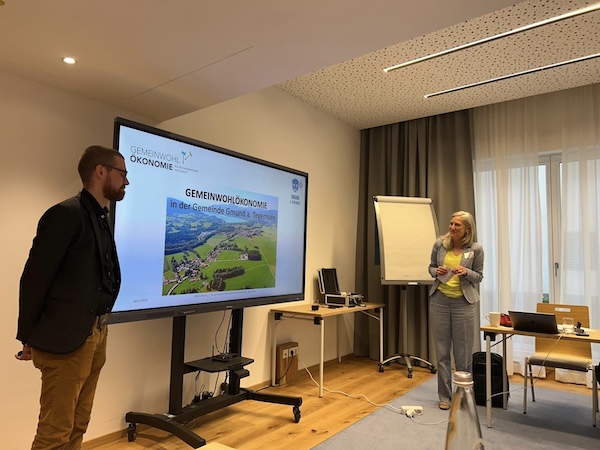
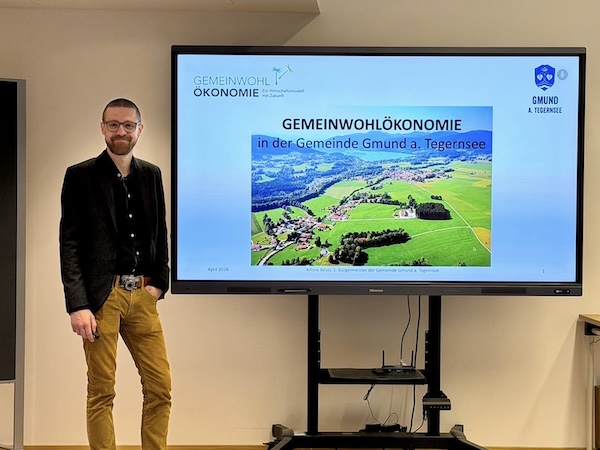
Lecture by Alfons Besel
Mayor of Gmund am Tegernsee
(represented by: Tim Jelitschek)

The municipality of Gmund consistently aligns its development with the principles of the Economy for the Common Good (ECG). The aim is to create a sustainable, “grandchildren-friendly” municipality that strengthens cooperation, consciously addresses conflicting goals and develops viable long-term solutions. In this way, the municipality also aims to be in a better financial position in the long term – a model for other towns and municipalities to follow?

Timm Jelitschek uses the example of Gmund to show how the economy for the common good has evolved from a guiding principle into a genuine management logic – as a unifying bracket for strategy, participation and concrete measures for an “enkeltaugliche” municipality:

Economic and municipal activities are systematically geared towards the well-being of people, the environment and society.

The Economy for the Common Good is an approach to:

  • Strategically framing urban development
  • integrate different interests and
  • consistently align communication, participation and measures with the common good.

In Gmund, the common good is not formulated as a guiding principle, but is implemented as a concrete steering and decision-making instrument for municipal action.

The Economy for the Common Good functions as an overarching management model that bundles existing measures.

At the same time, it acts as an activation tool: citizens are encouraged to get more involved as they can help define the goals themselves. This motivates them to get involved.

The ECG is not based on a label, but on a transparent common good balance sheet that makes it publicly comprehensible how a municipality works.

This is checked by external, trained auditors within the ECG movement and thus creates commitment and credibility.

  • 2021: political decision
  • then:
    • Administrative processes & accounting
    • Publication and public participation
    • Establishment of working groups
  • Since 2026: first concrete projects

Implementation takes place via working groups and participation formats (specifically: youth, housing, mobility, quality of life).

At the same time, the ECG creates a supra-regional network, as the participating municipalities exchange ideas, learn from each other and further develop their approaches.

A key effect is the greater consideration of regional products and sustainable supply chains, which strengthens local economic cycles.

Alfons Besel

April 23, 2026

Success through financial strategy

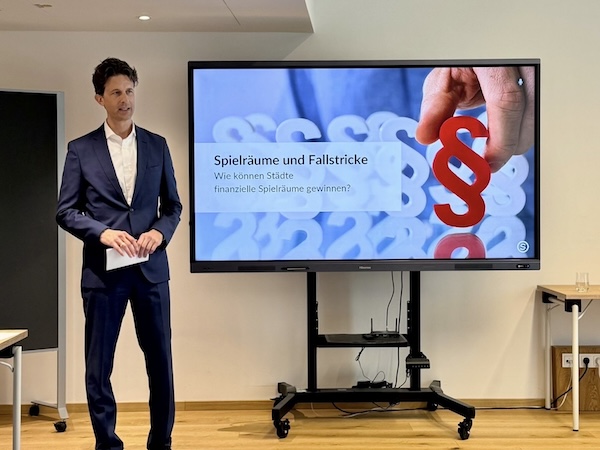
Urban Funding – How can we gain financial leeway?

In conversation with Dr. Stefan Detig
Expert in municipal law and former mayor of Pullach

Dr. Stefan Detig illustrates from his practice as a lawyer and his perspective as a former mayor: municipalities have more leeway than they often use. Volunteering, patronage and sponsorship can be effective levers for cities, but only if they are legally secure and transparent.
  • Volunteering is not a free substitute for municipal services – it needs clear roles, reliability and a legally secure framework.
  • As soon as local authorities structure or manage voluntary work, they move into the area of responsibility – liability and equal treatment must be taken into account.
  • For place marketing, this means enabling commitment, but not overtaxing it – otherwise motivation quickly turns into frustration.
  • Patronage opens up scope – but becomes critical when influence and the common good are not clearly separated.
  • Local authorities must ensure that private funding does not lead to non-transparent decisions – keyword: equal treatment and political neutrality.
  • “Sponsorship is not a donation, but an exchange of services – and that’s precisely why it has to be legally clean.”
  • “As soon as consideration is agreed, procurement, state aid and budget law come into play – this is often underestimated in practice.”

For place marketing, there is an opportunity in the (financial) commitment of citizens: creating identification and a sense of belonging – but always on the basis of clear rules and comprehensible processes. Cooperation with companies is possible and sensible, but requires transparency, clear contracts and an awareness of possible distortions of competition.

Dr. Stefan Detig: “Local authorities have more leeway than they often use. But only if they think about design and legal security together.” 

The program in detail

Here you will find the complete program including times and important addresses: Download program (PDF)

Below you will find the photos of our circle and a short summary of our manufactories.

Your contact for questions

Do you have any questions, requests or suggestions? Please contact Isabell Köster directly:

isabell.koester@stadtmanufaktur.com
+49 40 605 33 62-65

The CEO Circle is moderated by:

Thorsten Kausch

Thorsten Kausch

Managing Director of Stadtmanufaktur
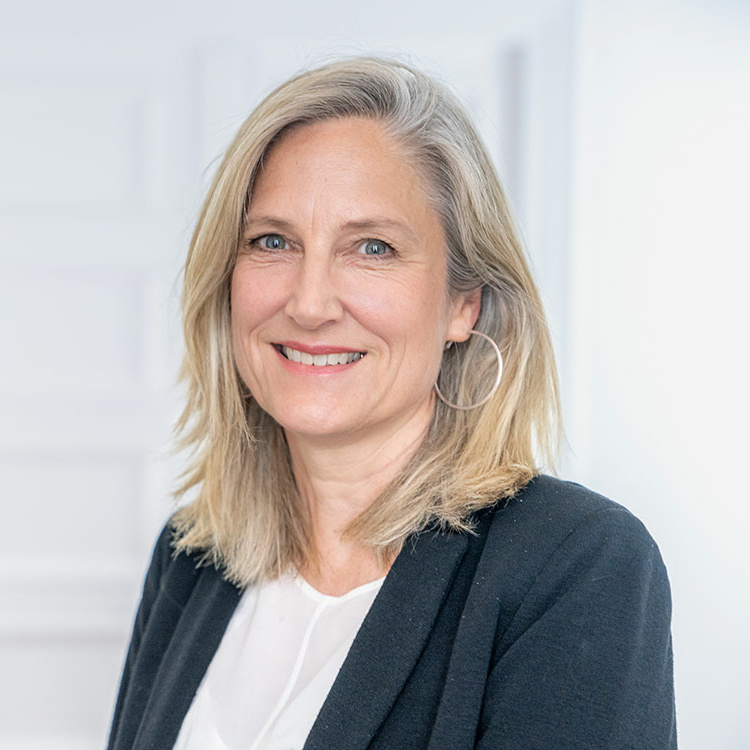
Isabell Köster, Project Manager at Stadtmanufaktur GmbH

Isabell Köster

Project manager at Stadtmanufaktur

The CEO Circle is supported by:
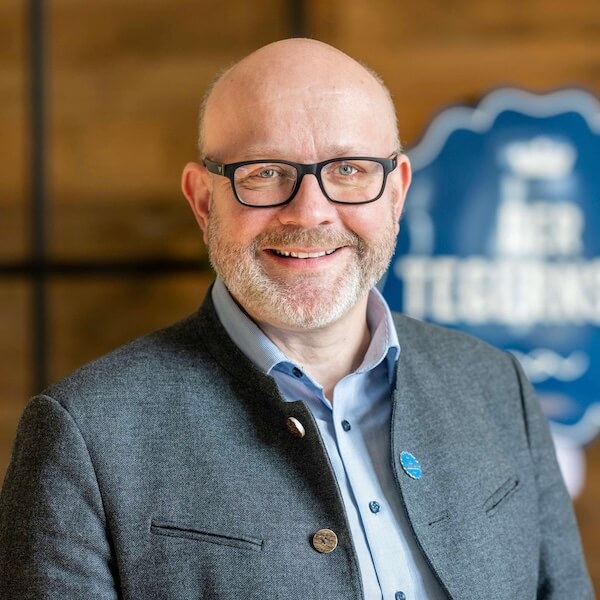
Christian Kausch

Managing Director of Tegernseer Tal Tourismus GmbH (TTT)

“The CEO circles are a workbench for the future of the city: decision-makers put their questions openly on the table, examine together what works – and take away concrete ideas for their own city.”

Thorsten Kausch, Managing Director of Stadtmanufaktur
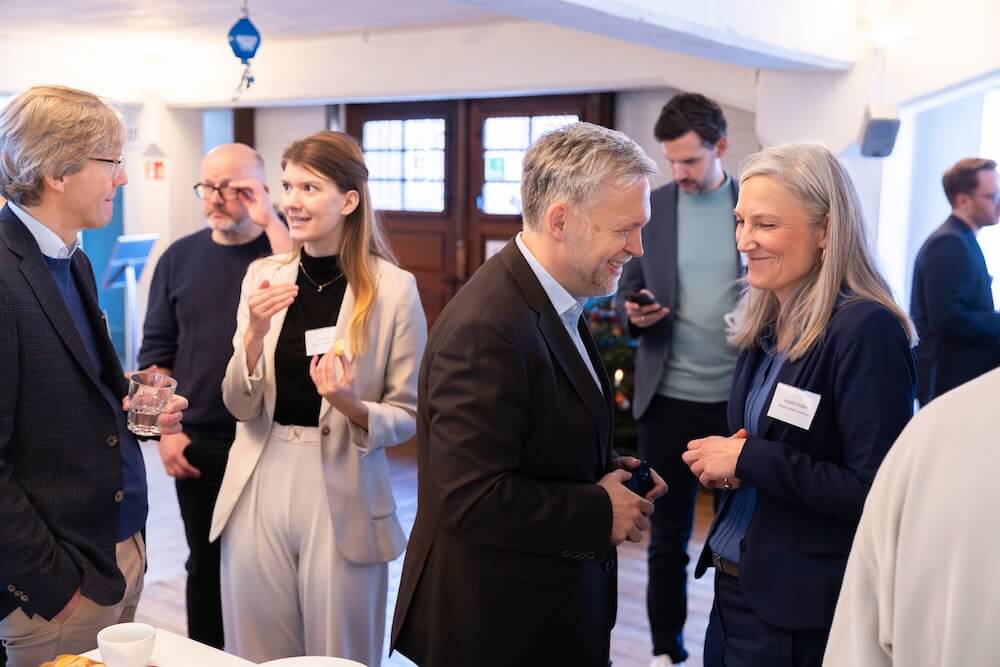
Thorsten Kausch and Isabell Köster from Stadtmanufaktur talk in the foyer

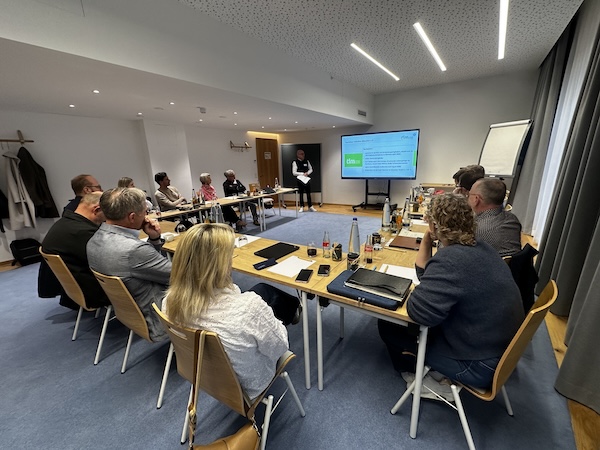
Photos and review

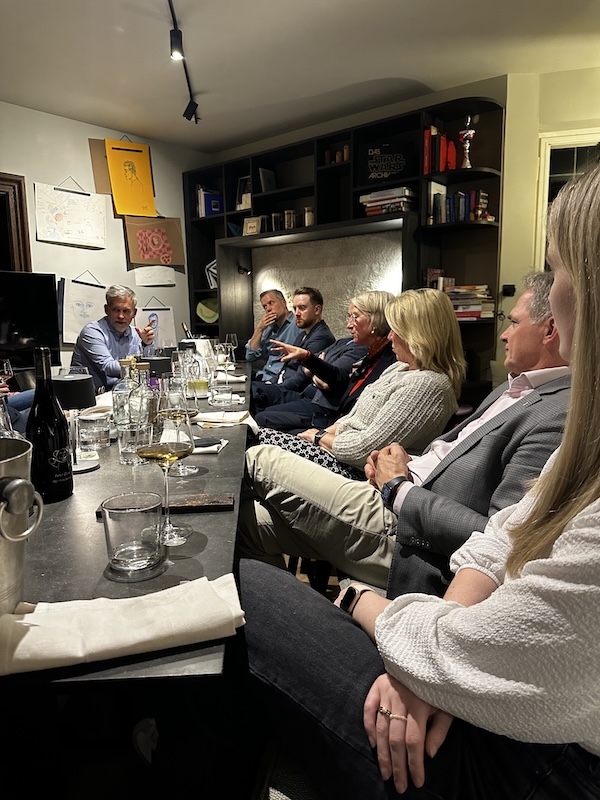
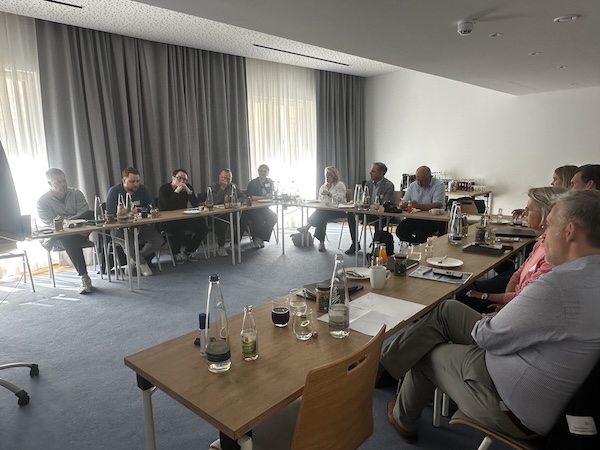
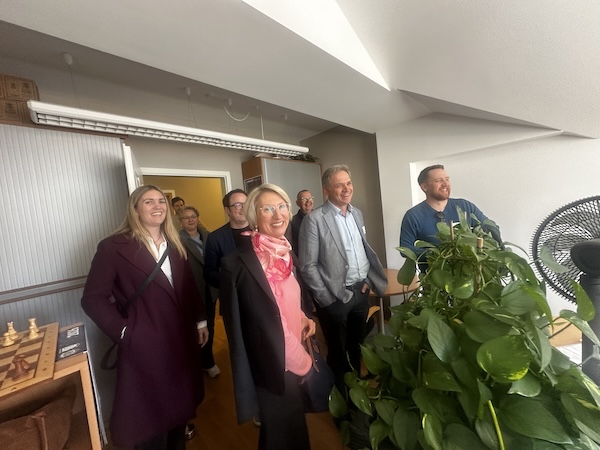
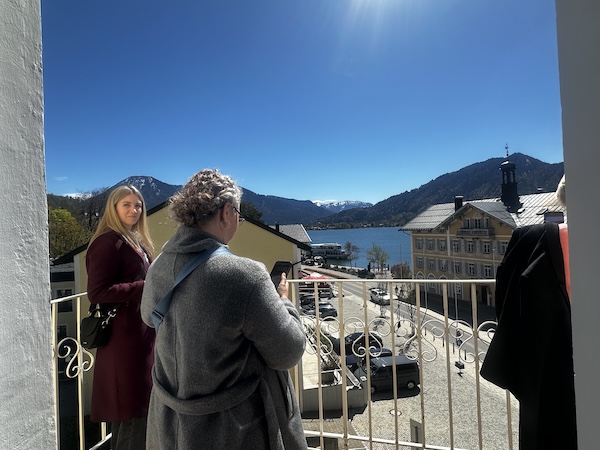
This was the CEO Circle “Medium-sized Cities” on April 22 and 23, 2026 in Tegernsee

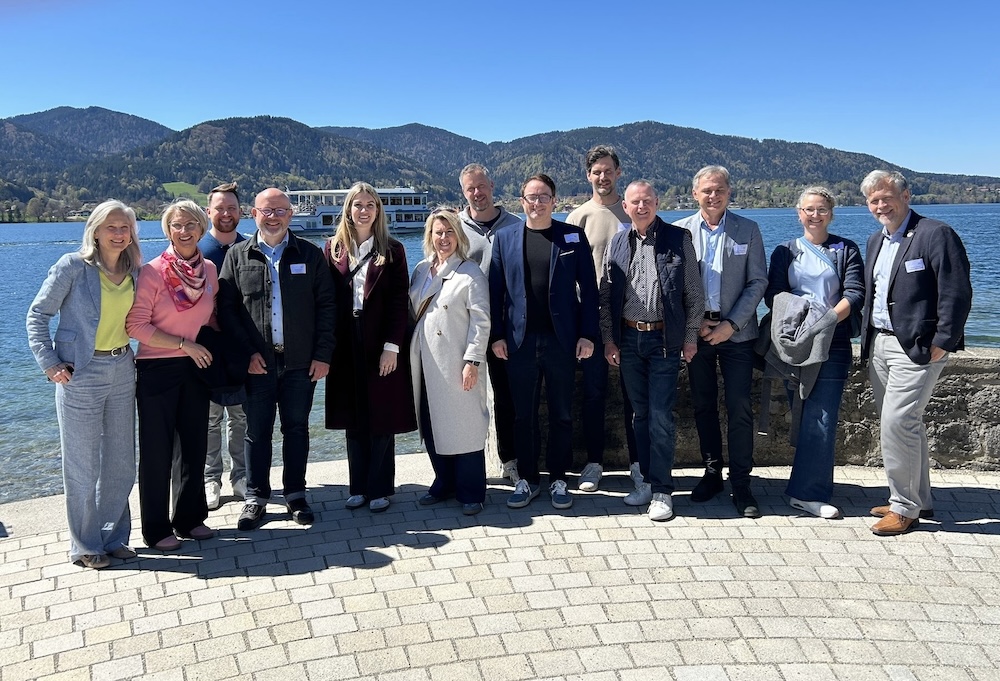
Group picture in front of Tegernsee
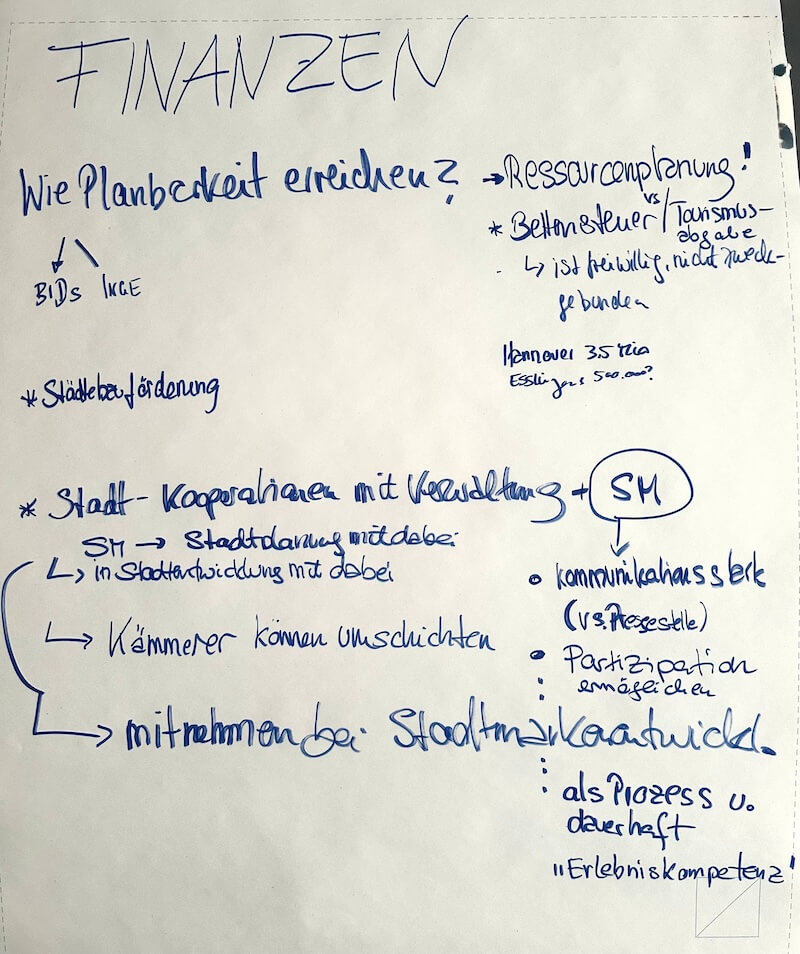
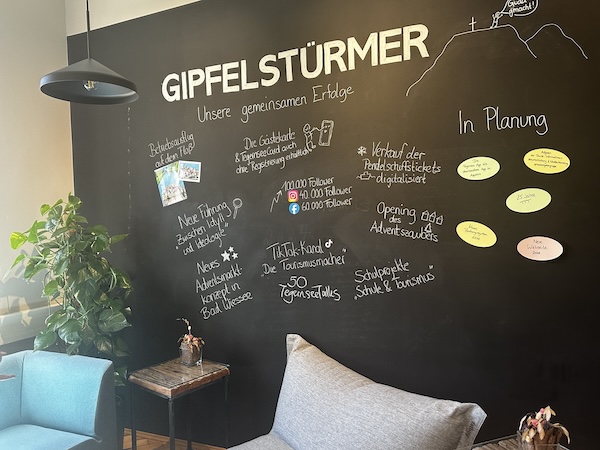
Summary from our manufactories

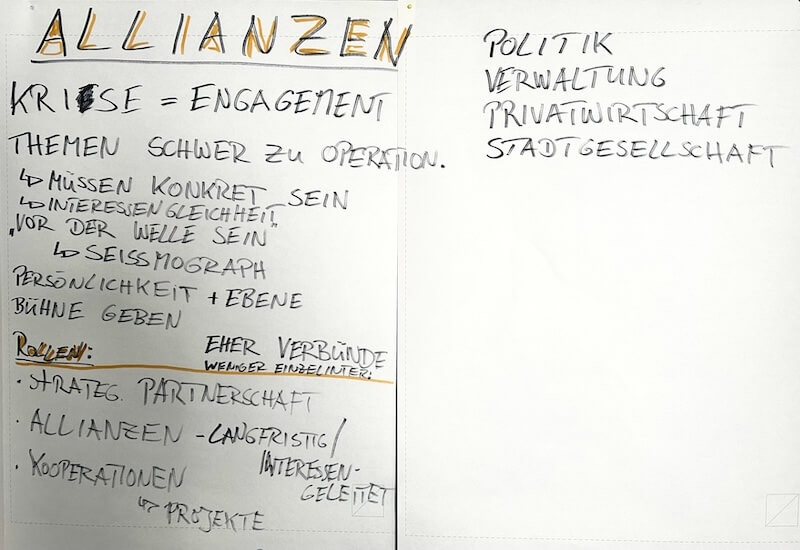
Topic: Resilience through alliances and strategic financing

  • Place marketing becomes relevant when it moves from being a communicator to a co-creator of urban development
  • Urban development needs place marketing, because place marketing is strong in communication and has “experience competence” (freer than the administration’s press office).
  • Conflict: When the budget/finances of one’s own company is one interest and the well-being of the city as a whole is another.
  • Crises are not a problem – but the moment in which commitment and cooperation can/must arise at best
  • Secure and predictable financing is the basis for constructive work and is based on a variety of sources.
  • Alliances work when: Topics are concrete, interests coincide and someone actively steers the process
  • Resilience is created where financing, alliances and participation interact – and place marketing is beginning to actively shape this connection.

Photo protocol:
Further impressions from our CEO Circle
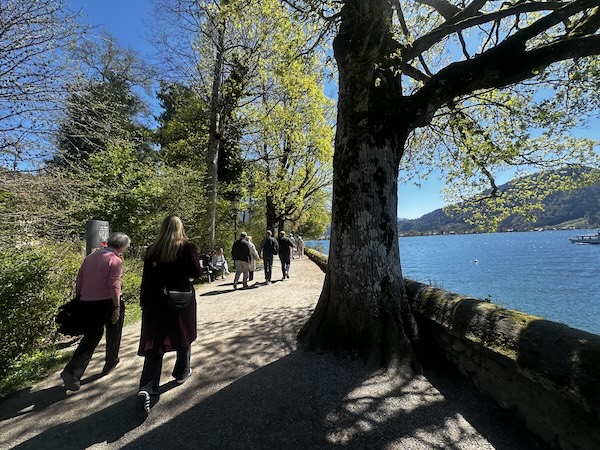
Image credit: Tegernsee/Dietmar Denger, Stadtmanufaktur GmbH

See you at the next circle.
Until then, all the best!