CONTENT
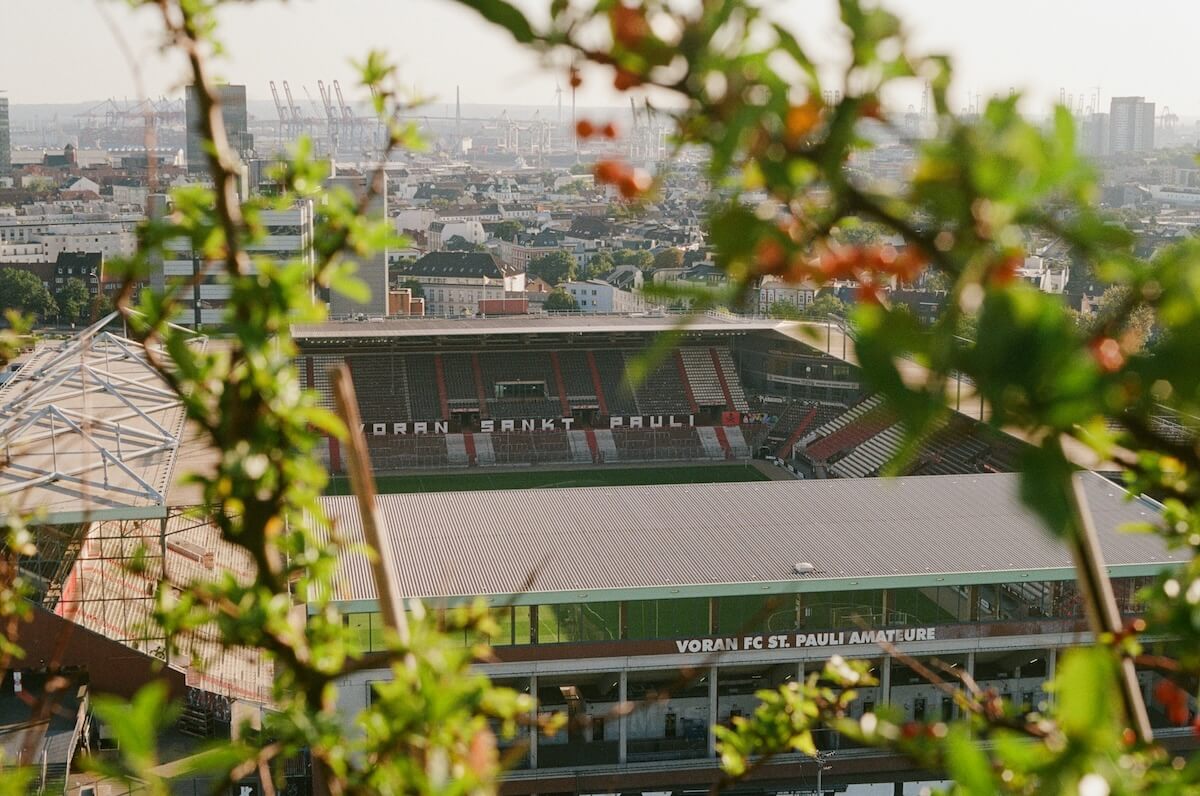
Image vs. identity – what’s the difference?
In place marketing, we often talk about image – the image that a city or neighborhood projects to the outside world. It is quickly told, striking, emotionally charged. Image thrives on contrasts, clear messages and reach. But this is precisely where its risk lies: it remains on the surface. It is dependent on media staging and the echo of the outside world. Short-lived, vulnerable, susceptible to crises.
Identity, on the other hand, is something else. Identity is deep. It is rooted in lived experiences, in shared values, in negotiation processes between people. Identity grows – and it grows from the inside out.
If you want to seriously shape the future in place marketing, you have to take the path of identity. Away from glossy brochures and towards a search for clues: What holds the people in a neighborhood together? What is their common denominator? What makes a neighborhood resilient when things get difficult?
It is not enough just to list functions: living, working, shopping, leisure. Every city centre fulfills these purposes. But why do people stay? Why do they identify with a place – so much so that they stand up for it, defend it, associate themselves with it?
Abstract:
Julia Staron examines the question of why communicating an image in place marketing is not (or no longer) enough. She also takes a look at her home district of St. Pauli in Hamburg: What is the strength of this neighborhood, which has to deal with violence and conflict on a daily basis?
Julia Staron identifies the unifying identity of St. Pauli and shows what place marketing and neighbourhood development can learn from it.
Place marketing: The answer lies in identity – not image
Hamburg’s St. Pauli district is a good example of the power of identity. Seen from the outside, it is a colorful, contradictory place: red light and religion, clubs and churches, scene and social work, left-wing activism and tourist exploitation logic. A district that has to deal with violence, poverty, noise, gentrification and conflict on a daily basis. And yet – or perhaps precisely because of this – St. Pauli radiates a tremendous strength. This strength is not a myth. It is real, tangible, alive.
As a resident and entrepreneur in St. Pauli, I can say that we asked ourselves where this strength comes from. How can a neighborhood with so many social, cultural and political contrasts function? What is the unifying element?
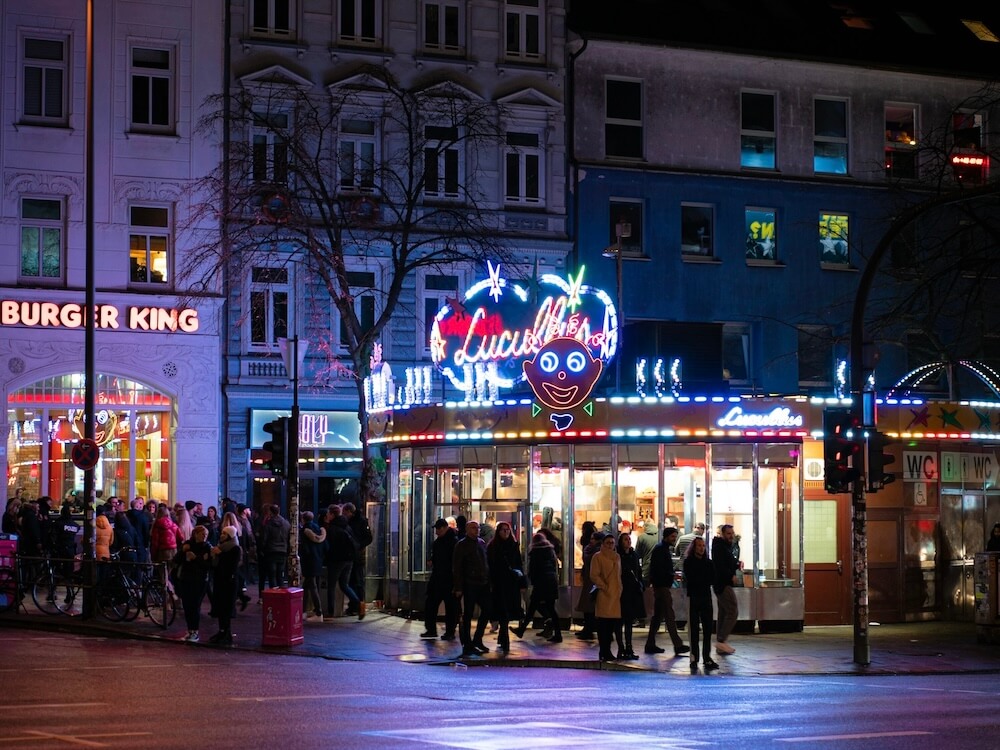
What unites the people of Hamburg St. Pauli – despite all the problems, even in the nightlife?
The answer was surprisingly clear: freedom.
Freedom as a core value – not as a political slogan, but as a practiced attitude. At St. Pauli, freedom means you can be who you want to be. You don’t have to like your neighbor, but you stand up for him when his freedom is threatened. It’s a silent consensus. Not carved in stone, but anchored in everyday life. And yes, there are disputes – about the limits of this freedom, about rules and impositions. But there is this common denominator. This shared identity.
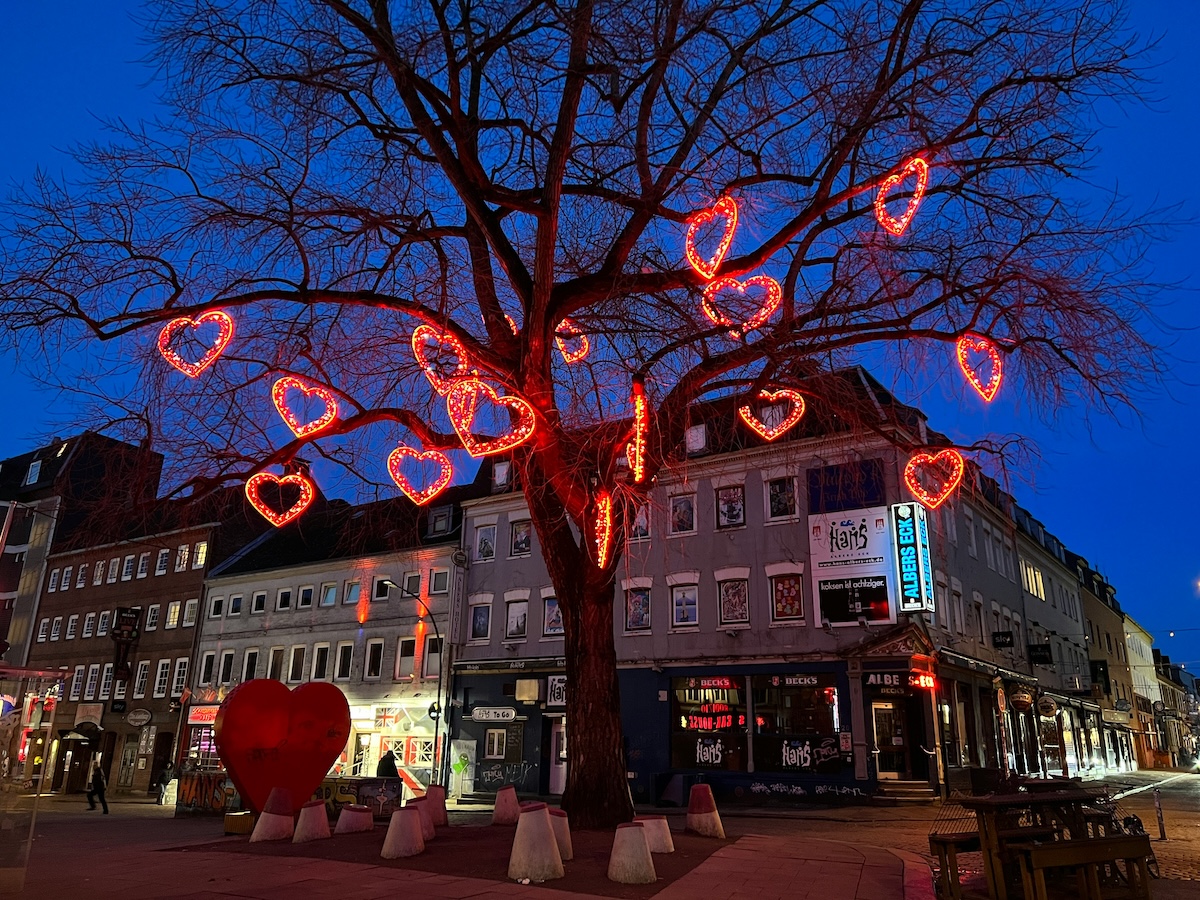
What makes a city or a neighborhood strong? Hamburg St. Pauli has found its answer: Freedom as a lived attitude
Identity as the foundation of a resilient neighborhood
A neighborhood – in the best sense of the word – is not just a place, but a feeling. A social space where people meet, respect each other, argue, celebrate and help. And it is precisely here that the difference to a mere image becomes clear. Image is like a mask – beautiful, but interchangeable. Identity is like a face – with wrinkles, scars, expression, depth.
Even supposed weaknesses are part of it. Violence in a neighborhood also shows its defensiveness. Economic poverty often produces strong cohesion. A complex, confusing diversity makes real freedoms possible. Much is a question of perspective. The art of place marketing lies in not looking away – but listening. Not to smooth – but to understand. And: not to exaggerate – but to translate.
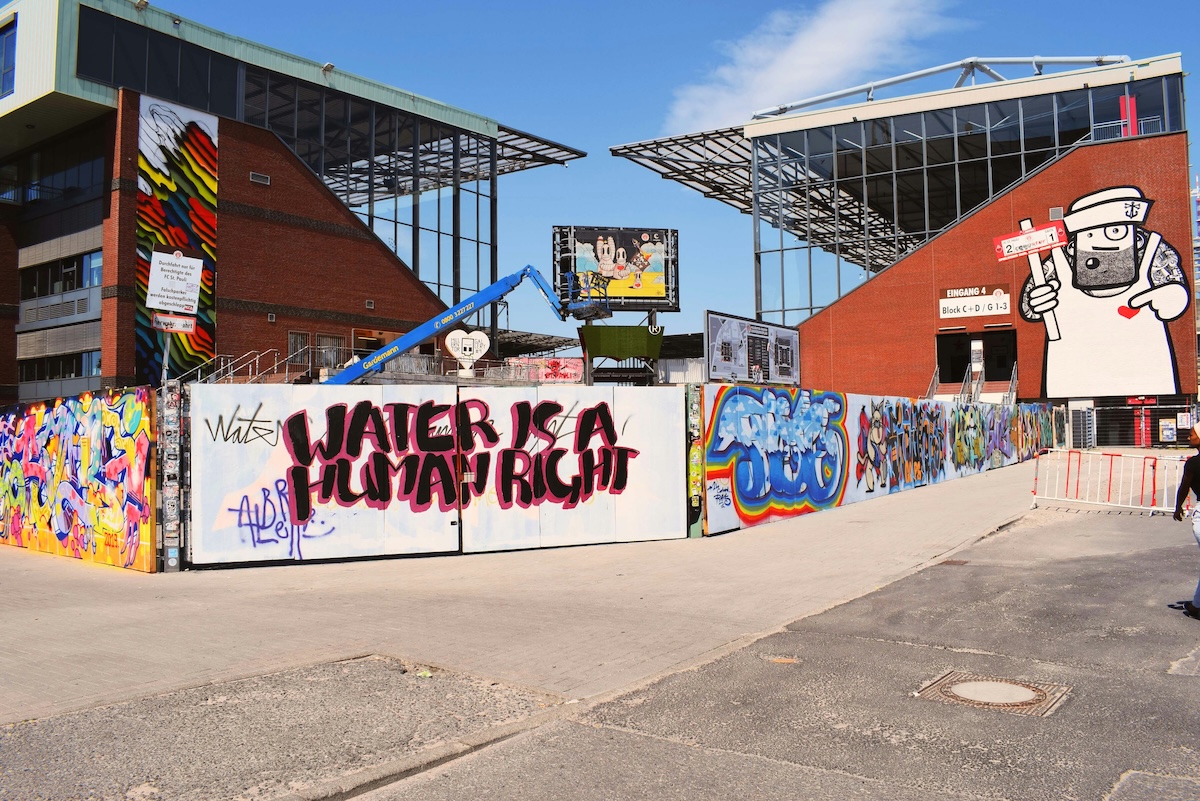
The graffiti with “Water is a Human Right” at the Millerntor stadium in Hamburg St. Pauli also shows freedom as a lived attitude
A neighborhood that knows its identity can develop strength from it
It can communicate credibly, develop real narratives, have a touristic effect, but also promote social cohesion. It becomes a neighborhood – a term that means more than just an address. A neighborhood is a place that has meaning. For the people who live there. For guests who come back. For children who grow up there.
And quite practically: I can also buy sneakers anywhere – online, in the outlet, in the pedestrian zone. But I go to a particular store in the neighborhood because there is more to it than the product: the encounter, history, atmosphere, friction. The person becomes part of the experience. And that makes all the difference.
Place marketing must strengthen identity, not manage image
We have to design and accompany places in such a way that people say: This is where I want to be. This is the right place for me. This is where I stay. This is not achieved with slogans, but with attitude. Not with advertising campaigns, but with genuine relationship management. Not from the outside in – but always from the inside out.
Because only what is right on the inside can have an effect on the outside. And only those who understand themselves will be understood.
Image credit: Unsplash

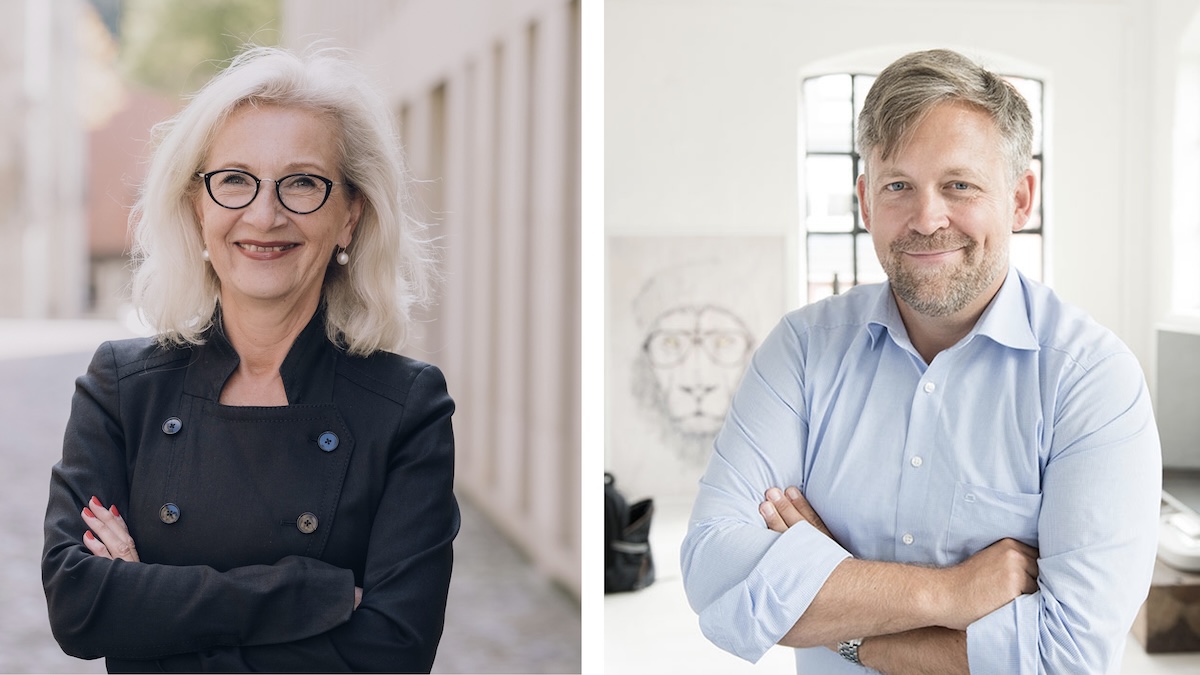
Julia Staron
is project manager at Stadtmanufaktur, artist and neighbourhood manager in the BID Reeperbahn in Hamburg