CONTENT
Note:
This interview appeared in the February 2026 print and digital edition of Idowa. We may also publish the text in our magazine – with the kind permission of Mediengruppe Attenkofer.
The interview was part of a special series on the mayoral election in Landshut in March 2026. Our urban development expert Sophie May was asked about the focus topic of retail and gastronomy.
Author: Ingmar Schweder
Background to the Lord Mayor election in Landshut: How the city center is doing
Like many city centers in Germany, Landshut’s historic old town is facing major challenges. With the election of a new mayor and a new city council on March 8, 2026, there is an opportunity to strategically rethink city center development. Landshut has an exceptionally well-preserved historic building fabric and a small-scale store structure that has long been considered a strength.
At the same time, this structure is vulnerable: in recent years, there have been repeated prominent vacancies and noticeable ups and downs in retail and city center gastronomy These developments are part of a nationwide structural change that not only raises economic questions, but also affects the quality of stay and the role of the city center as a place to meet.
In terms of urban development, Landshut is characterized by its dense historic old town with little natural greenery. Although the Isar runs right on the edge of the old town, it has so far only been integrated into city center life to a limited extent. In order to counter the lack of greenery and the consequences of climate change, the city is using mobile greenery in certain areas. However, these measures have met with mixed reactions, particularly with regard to the historic character of the old town.
The relocation of the Christkindlmarkt from the city center is also the subject of controversial debate. Against this backdrop, the question arises as to which strategies and measures are suitable for further developing Landshut’s historic old town as a lively, economically viable and climate-resilient urban space.
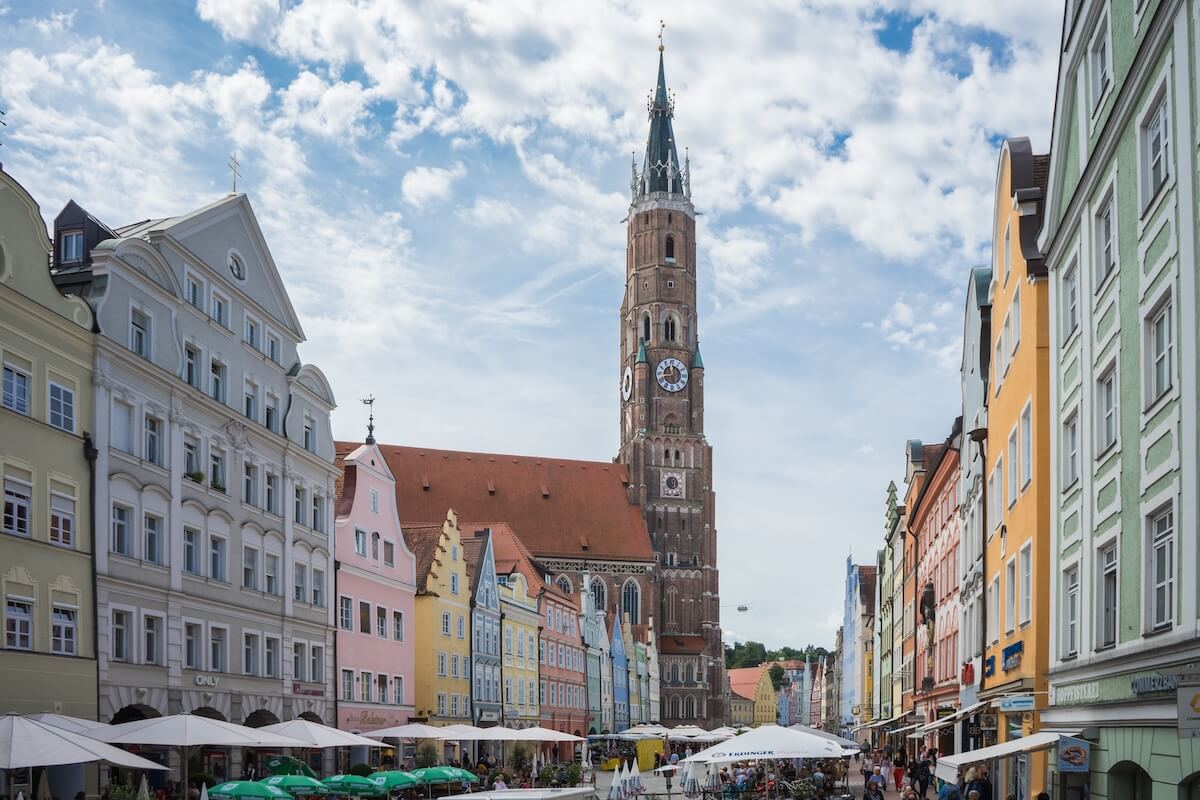
The old town of Landshut – known for its colorful houses and the “Landshut Wedding” (historical festival) that takes place every four years
Retail and gastronomy: Interview with expert Sophie May
Ingmar Schweder: Ms May, you have supported city center projects in very different cities – from Flensburg to Linz. What key building blocks are needed today for a coherent overall concept and, in your experience, where do municipalities most often fail?
Sophie May: A bad starting point is when urban development looks piecemeal to the outside world. At the beginning, you always need a clear idea of where you want to go – some call it a mission statement, others a profile. The distinction is important: a profile describes what a city is today, a mission statement describes where it wants to go. However, you can only market credibly what is already there. If you describe yourself as a “green city” but have hardly any trees, you lose credibility.
Ingmar Schweder: You talk about piecemeal work. Can you explain this in more detail with regard to municipalities?
Sophie May: Ideas must not be developed solely in the mayor’s office or in place marketing, but in dialog with all relevant players: property owners, tradespeople, event organizers, cultural workers. The courage to focus is also crucial. Many cities want to be family-friendly, shopping cities, attractive to tourists, historic and green at the same time. This diversity quickly becomes arbitrary in competition. Not every urban space – and not even the entire city centre – has to do everything. What is needed is an idea, and this must also be communicated to the outside world.
Ingmar Schweder: Can you give an example?
Sophie May: An example from Flensburg illustrates this well: in a citizens’ survey, the Scandinavian flair of the city center was cited as a particular strength. At the same time, tradespeople ordered olive trees to create “more atmosphere”. However, Scandinavian flair and olive trees do not go together. It is therefore important to develop a common idea, communicate it clearly and involve all stakeholders so that everyone pulls together for a coherent overall concept.
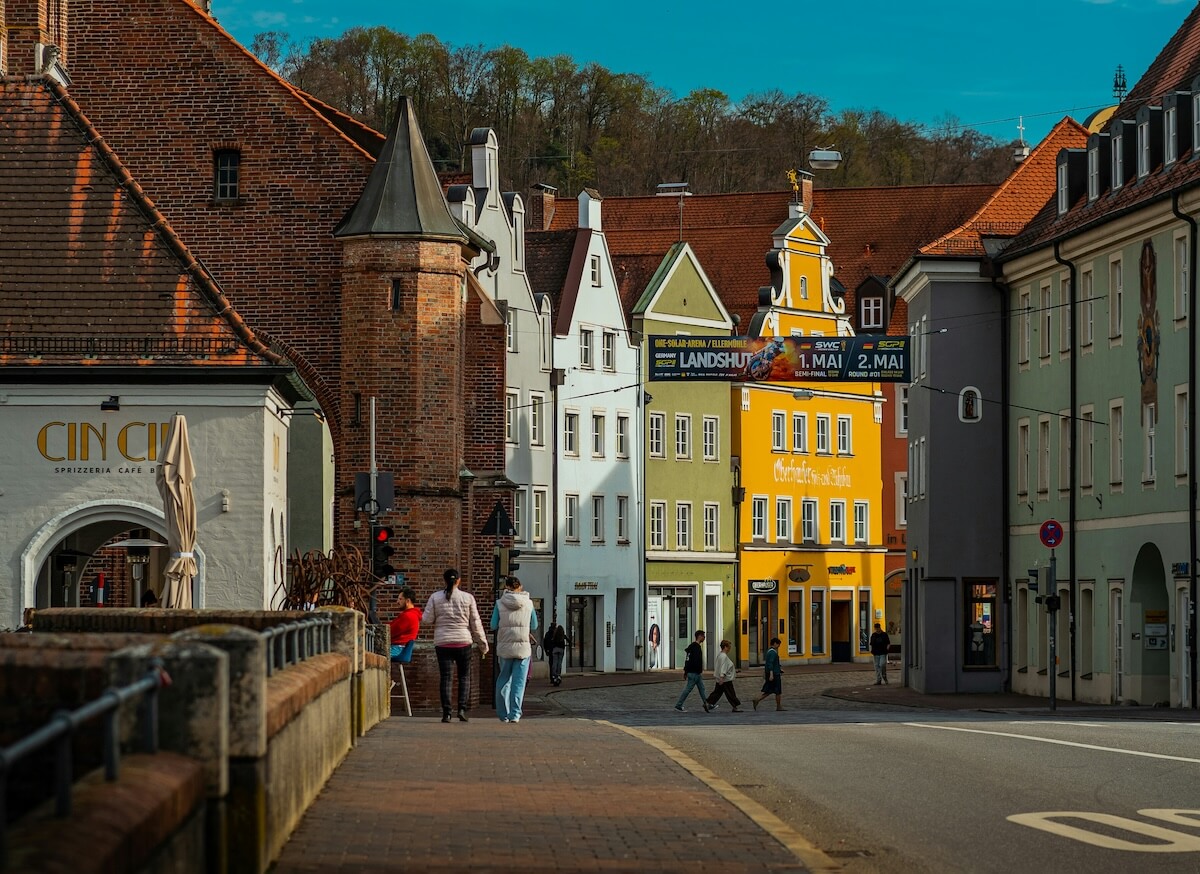
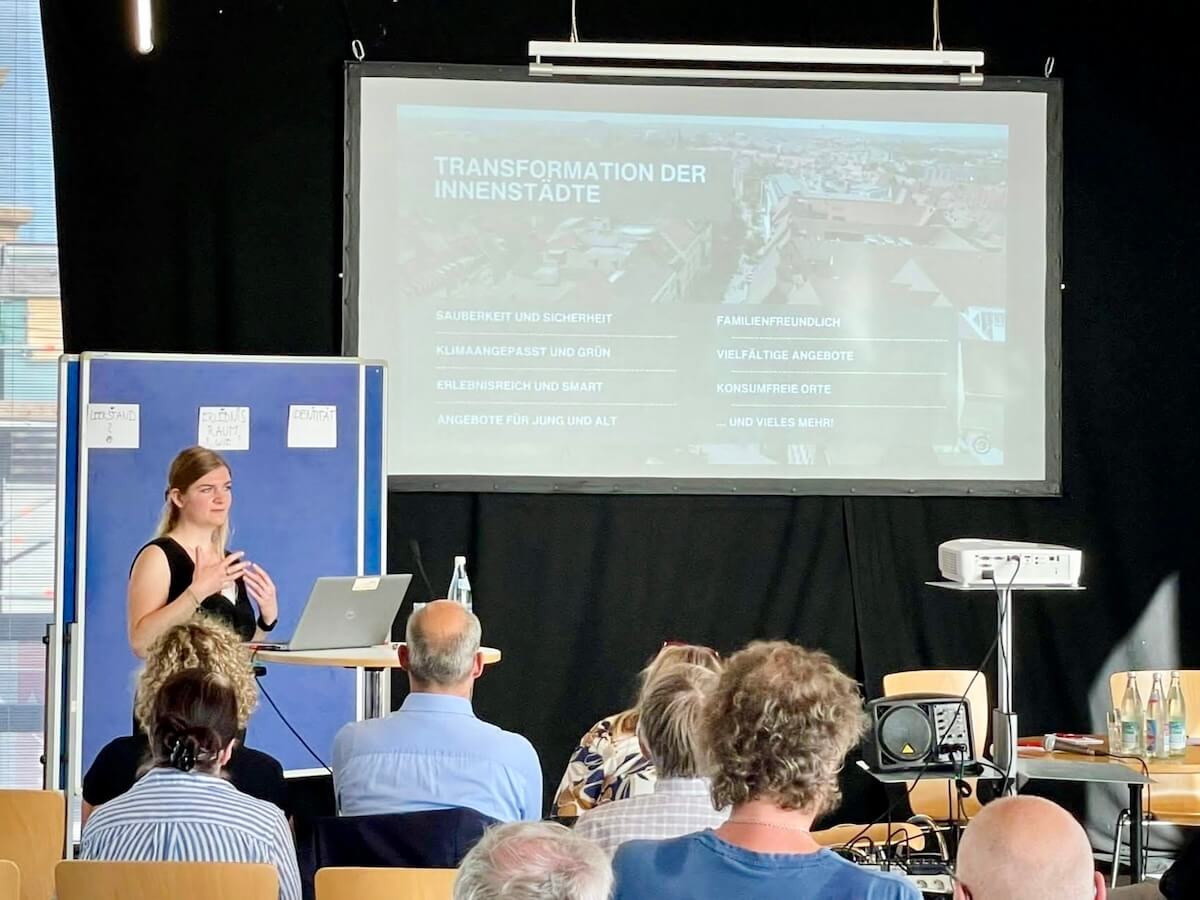
How are retail and quality of stay developing in Landshut? – Cities can steer city center development with a mission statement and dialogue with relevant stakeholders, says Sophie May
Ingmar Schweder: In your experience, where do things get stuck, especially in medium-sized cities like Landshut?
Sophie May: There are conflicts of interest everywhere: between monument protection and greening, between events and residents’ interests, between tourism and everyday use. These cannot always be completely resolved. The demands and stakeholder groups are often so great that it is not always possible to find a solution. It is important not to get bogged down in discussions for years, but to try things out temporarily. Many cities don’t dare to do this for fear of upsetting someone.
Ingmar Schweder: In your experience, how can progress be made?
Sophie May: One major issue is cooperation between the stakeholders. From around 50,000 inhabitants, it becomes difficult to get everyone involved around the same table. Different groups speak different languages. The exchange works better if people are involved who know the respective perspectives – such as former retailers or cultural workers. It is often less about facts and more about trust, interpersonal relationships and good stakeholder management. You can achieve a lot with the right people around the table. Small, target group-specific formats – such as restaurant roundtables or protected meetings for owners – are more effective here than large city center forums. Many local authorities are overwhelmed here because it involves a lot of effort. You have to take a strategic approach to building up a group of stakeholders with whom you can shape the city in the long term.
Ingmar Schweder: A key issue is vacancy. In Landshut, even prominent buildings have recently stood empty for years. The city often refers to its limited scope for action. How do other municipalities deal with this?
Sophie May: Local authorities’ direct options for action are indeed limited because they are dealing with private property. This makes personal contact with the owners all the more important – ideally at a high level, for example as a top priority for the mayor. Moreover, not all vacancies are the same. There are structural vacancies, such as buildings in need of refurbishment or long-term development plans. You have to put up with some of that. Temporary uses can help to make dynamics visible. The aim should not always be for an operator to become permanently established, but rather to show that something is happening: Something is happening. It is important to set realistic, smaller goals and to think strategically rather than just using vacancies for short-term promotional projects.
Ingmar Schweder: Landshut’s city center is historically shaped, densely built-up and comparatively sparsely greened. How can climate adaptation and quality of stay be improved without altering the historic character?
Sophie May: First of all, the mission statement should clarify what role the historic old town plays – also in relation to climate adaptation. I think it’s important that historic old towns remain usable in summer. If it is too hot and nobody is there, a beautiful historic old town is no longer of much use. Many small measures are more effective here than one large project: mobile greenery, water elements, façade greening. Mobile solutions in particular are often used in historic cities because they are flexible and comparatively inexpensive. At the same time, the maintenance effort and follow-up costs need to be considered realistically – this is often underestimated.
Ingmar Schweder: If you look ten years into the future: How would you recognize that city centre development has been successful?
Sophie May: A key indicator is trust. When stakeholders say: the city cares, we are pulling in the same direction, we know where we are going – and I have confidence in the location. External communication also plays a major role. Media coverage often shows how a city center is doing. In the urban space itself, success is demonstrated by a good mix of target groups, quality of stay, climate adaptation and dynamism in retail and gastronomy – also through new, experimental concepts.
Ingmar Schweder: Your leitmotif is: “Break up structures and change thought patterns.” What do cities most often fail to do?
Sophie May: Silo thinking within the administration. Different departments – such as Green, Public Order, Economic Development or Place Marketing – pursue legitimate but separate perspectives. If there is no common picture internally, it becomes even more difficult to involve external stakeholders.
Ingmar Schweder: What three strategic guidelines would you give Landshut for the next ten years?
Sophie May: Firstly, develop a clear mission statement or profile and communicate it consistently to the outside world. Secondly, get to implementation more quickly and implement visible measures during the concept phase in order to get stakeholders on board. Thirdly, create planning security – through commitment from the top management, continuous communication and reliability towards owners, businesses and citizens.
As a strategy consultant at Stadtmanufaktur GmbH, Sophie May supports municipalities in the DACH region (Germany, Austria, Switzerland) in the transformation of their city centers as well as in strategic and operational issues relating to city center development and city center marketing, retail and vacancy management.
Image credit: Stadtmanufaktur, Unsplash
Sophie May
is a project leader at Stadtmanufaktur specialising in architecture and urban development. Her favourite city? Hamburg, of course