CONTENT
A decision made without the involvement of those affected is a bad decision
A municipality must make decisions about its transportation infrastructure: Should the city centre be car-free in the future? Or should the streets be expanded to make it easier for drivers to get into the city centre?
The decision has the potential to spark a lot of conflict. The administration and politicians are well aware of this. They reason that the sooner the issue is off the table, the less room there is for critics to attack them. That is why, after a quick discussion, they decide: The city centre will become car-free— without addressing the issue extensively in public or seeking out other opinions.
When residents find out that they can no longer drive their cars right up to their front doors, there is widespread outrage. Retailers and restaurants are wondering how they will receive their deliveries in the future. And visitors to the city centre only learn of the decision when they find themselves stopped in front of the “No Through Traffic” sign. In short: there is widespread concern and dissatisfaction on all sides.
This urban scenario makes it clear: Just because certain issues have the potential to cause conflict doesn’t mean they should be decided without involving the public. On the contrary: Our experience even shows that public participation can smooth things over and facilitate compromises, especially when it comes to issues with the potential for conflict. Below, we analyze which formats work particularly well in which situations, drawing on real-world projects.
Abstract:
Many projects and decisions in a city are accompanied by participatory initiatives. Typical goals of participation include taking into account the perspectives of urban stakeholders and increasing acceptance of and awareness about a project.
However, not every participatory format is suitable for every project. Finnja Korn demonstrates how important it is to understand the four stages of participation and to choose the appropriate format for citizen participation.
Citizen participation is the work of democracy
Decisions about urban spaces affect many people. To ensure that they support these decisions, decisions must not be made over their heads. Instead, stakeholders should be informed of changes early on, be involved in the decision-making process, and have the opportunity to participate.
Why is this important? Let’s briefly walk through our scenario from above:
- If retailers and restaurant owners had been consulted before the decision was made, they could have raised their concerns about delivery traffic in a timely manner and worked with decision-makers to find a solution.
- Residents would likely have supported the decision to make the city centre car-free if the vision behind it had been presented to them: a higher quality of life, safe places for children to play, and more events in public spaces.
- If visitors had been able to voice their concerns beforehand, bus and rail connections would have been reviewed and expanded in a timely manner.
All of these reasons speak in favor of participation. The key point here is that the various stakeholders must be involved in such a way that their perspectives are truly heard and, where appropriate, factored into the decision.
Participatory processes promote democracy in two ways: First, they enable active participation in decision-making; second, participation increases trust in our democratic system. This has been confirmed by various studies.
Participation isn’t always mandatory, but it’s often a good idea
Because they are so important to our democracy, there are legally mandated participation procedures, known as “formal participation.” These are often required in zoning plan procedures and other urban development projects. Sometimes, ongoing citizen participation is also required, such as in areas of integrated urban development. The circumstances under which children and adolescents must be involved are enshrined in the UN Convention on the Rights of the Child. There are age-appropriate methods for their participation, which you can read about here.
Even where citizen participation is not required by law, it still enables engagement and fosters trust in development processes. That is why it often takes place even without legal requirements—as is the case in many projects in cities and municipalities that we support as Stadtmanufaktur.
Involvement, participation, engagement—what’s the difference?
Involvement and Participation
“Participation” comes from the Latin words “pars” — “part” — and “capere” — “to take, to seize” — and translates to “to take part,” “to join in,” or “involvement.” “Involvement” and “participation” are synonymous terms that mean taking part in discussions and being involved in decision-making (Source: bpb.de).
Participation:
The term “participation” is closely associated with inclusion. It also plays a major role in the fields of child and youth welfare, assistance for the homeless, migration, and refugee aid. Although there is no single, universally accepted definition of the term, participation generally describes the ability to take part in society on one’s own terms. This also includes social and political participation (Source: bpb.de and Springer VS).
In the context of civic participation, participation means that people from diverse walks of life have the opportunity to take part in such initiatives.
The 4 Stages of Citizen Participation: Forms and Examples
Let’s turn to the crux of citizen participation: choosing the appropriate form—and thus the format and method—of citizen participation. These vary depending on the nature of a project or decision-making process. After all, stakeholders cannot have an equal say in every decision. Sometimes a long-term participatory decision-making process makes sense, while in other cases an informational meeting may be sufficient.
Participation procedures are therefore assigned to different stages, each of which determines the degree of participation. Before a decision is due and public participation is planned, the following questions can help with classification:
- Who is affected by the decision?
- What are the decision-makers’ expectations regarding the participatory process?
- How much co-decision-making is needed?
Once these questions have been clarified, project leaders will be better able to assess which level of participation is appropriate.
An Overview of the Levels
Based on the literature and our practical experience, we divide citizen participation into four stages:
- Step 1: Gather Information
- Step 2: Listen
- Step 3: Participate
- Stage 4: Co-decision-making
In practice, participatory processes often take hybrid forms. However, categorizing them makes it easier to find the right format for participation and helps manage expectations, which greatly influences the success of a participatory process.
Let’s return once more to our scenario involving a car-free city centre: Even with a participatory process, there could be significant dissatisfaction with the decision. For example, if stakeholders are invited to what is essentially an informational meeting, but this is miscommunicated and the participants assume they will have a say in the matter. In the end, they would feel sidelined.
If it’s clear from the start that this is an informational session with an opportunity to ask questions, the situation looks quite different. That’s why it’s so important to understand the stages of participation clearly and to communicate them accordingly.
Step 1: Get Informed
The goal of the first stage of public participation is to inform the public about a regional issue or project. This not only ensures transparency, but the information also serves as the foundation for further participatory processes. Depending on the project, this can be achieved through participatory formats such as informational events, public notices, or websites.
One advantage of this type of participation is that the initial exchange between the public and decision-makers establishes a foundation of trust among various interest groups. However, the opportunities for interaction are limited.
What is important at this stage is the timing of participation. This is because citizens’ interest sometimes develops in a direction opposite to that of decision-making opportunities. A typical example:
- At the start of projects, there are often more opportunities for participation, although public interest is still low at that point.
- As a decision draws nearer, interest increases, but opportunities for participation decrease.
Example: Bergedorf NOW website
In Hamburg-Bergedorf, we were part of the Bergedorf NOW city management initiative. Our mission was to keep the town center attractive and livable despite ongoing changes. To this end, we also organized stakeholder and community engagement activities over an extended period.
On the Bergedorf NOW website, we provided information about upcoming participation opportunities and further developments in the town center. The website thus not only provided information about the town center and increased its visibility; it also served as an initial, low-threshold point of contact, thereby facilitating access to further participation opportunities.
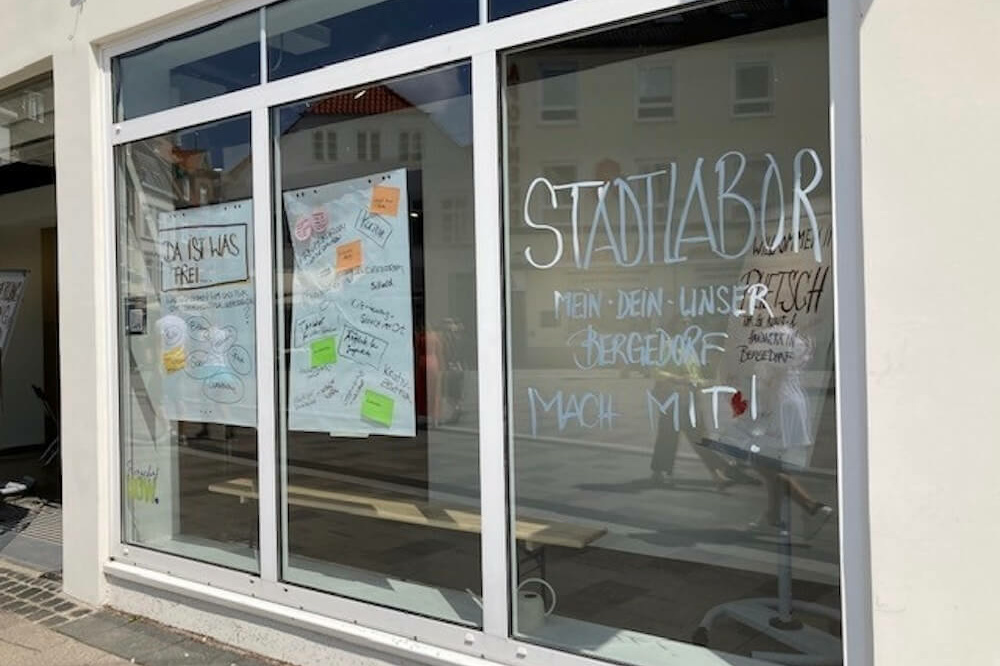


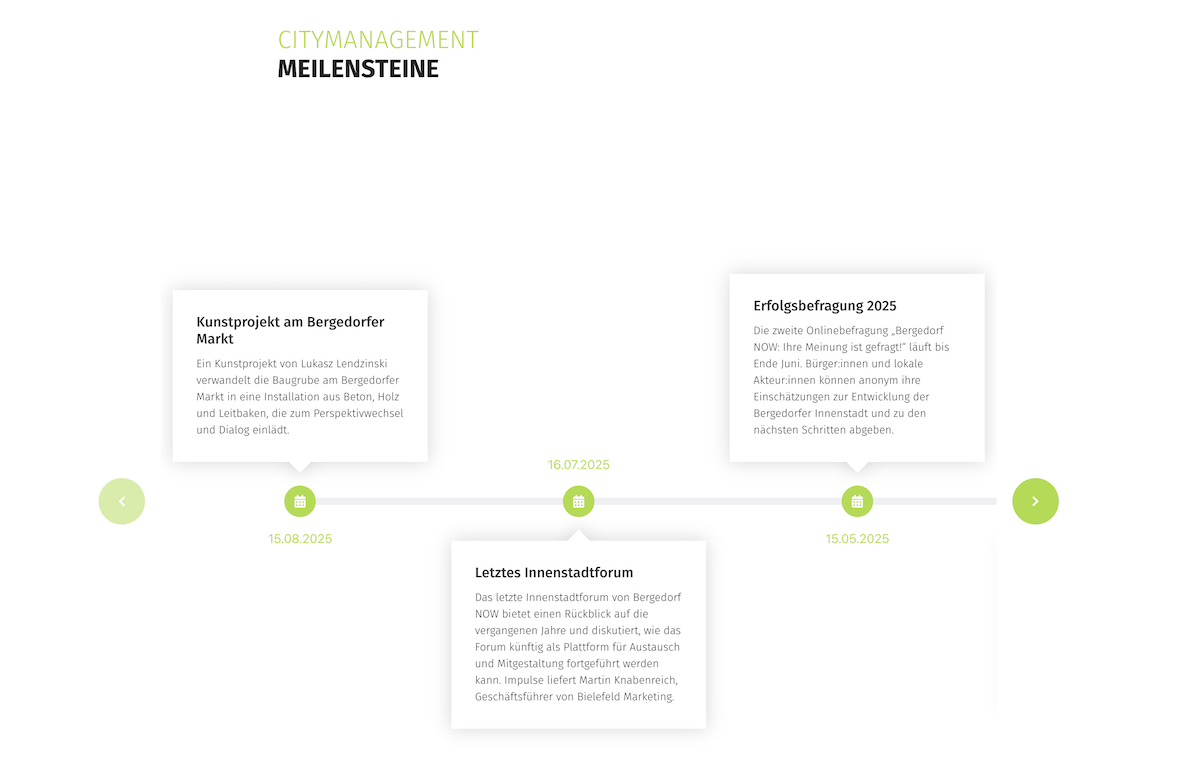
Participation rarely happens in isolation: Ideas were developed collaboratively at the Stadtlabor and in workshops on Bergedorf Now—and the website bergedorf-now.de provided residents with transparent information about key milestones in the project
Levels of Participation: Background
Depending on the methodology framework, the levels of participation have different names and, in some cases, further subcategories:
- The city of Hamburg , for example, divides communication between the administration and citizens into four levels: information, participation, co-determination, and delegation (Source: Hamburg.de).
- The state of Saxony, in turn, also draws on specialized literature but defines five levels: informing, consulting, involving, cooperating, and empowering (Source: Sachsen.de).
- The handbook published by the Federal Agency for Civic Education even presents seven levels, which in turn can be assigned to four functions: individual benefit, influencing public opinion, consultation and citizen input, as well as co-decision-making and co-governance (Source: bpb.de).
Step 2: Listening
The name says it all: In addition to providing information, Level 2 is all about listening. Participation formats at this level aim to bring stakeholders together in conversation, develop a consensus, and document needs.
In Stage 2, participants are often invited to a citizen dialogue, which is suitable for larger groups of up to 100 people. This is usually based on the “World Café” method, in which a subtopic is discussed at each of the different tables. After a set amount of time, the participants switch tables. This allows as many people as possible to engage in conversation about a core topic and deepen their understanding through the discussions. The results can be documented as a summary of opinions.
Example: Participation in the Olympics in Hamburg
Our public engagement initiative regarding the City of Hamburg’s bid process for the Olympic and Paralympic Games demonstrates how many stakeholders can be consulted on a controversial issue at this stage.
To discuss the opportunities presented by the Olympics with the people of Hamburg, we have designed three engagement formats—each tailored to its target audience:
- During a full-day kickoff event featuring talks, keynote speeches, and discussion zones, all Hamburg residents were invited to learn more, engage in dialogue, and share their feedback and ideas.
- Residents were welcome to participate in citizen dialogues across all seven districts. There, the bid concept was presented, opportunities were discussed with athletes, and finally, at various dialogue stations, wishes, ideas, and criticisms were voiced and documented on bulletin boards.
- In expert dialogues, representatives from Hamburg’s business, cultural, political, and civic sectors were involved in the process as stakeholders. There were informational sessions, keynote presentations, and idea sprints to introduce the concept, identify potential challenges, and develop solutions.
Based on the results from the stakeholder engagement and an online survey, the city was able to further develop its bid concept for the Olympics.
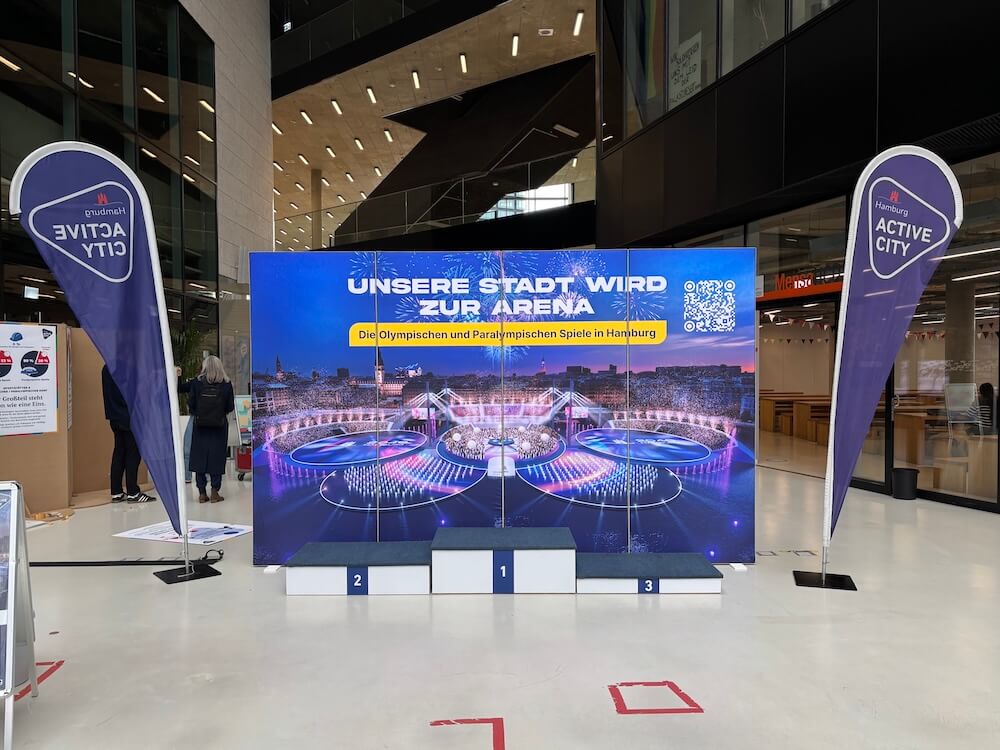
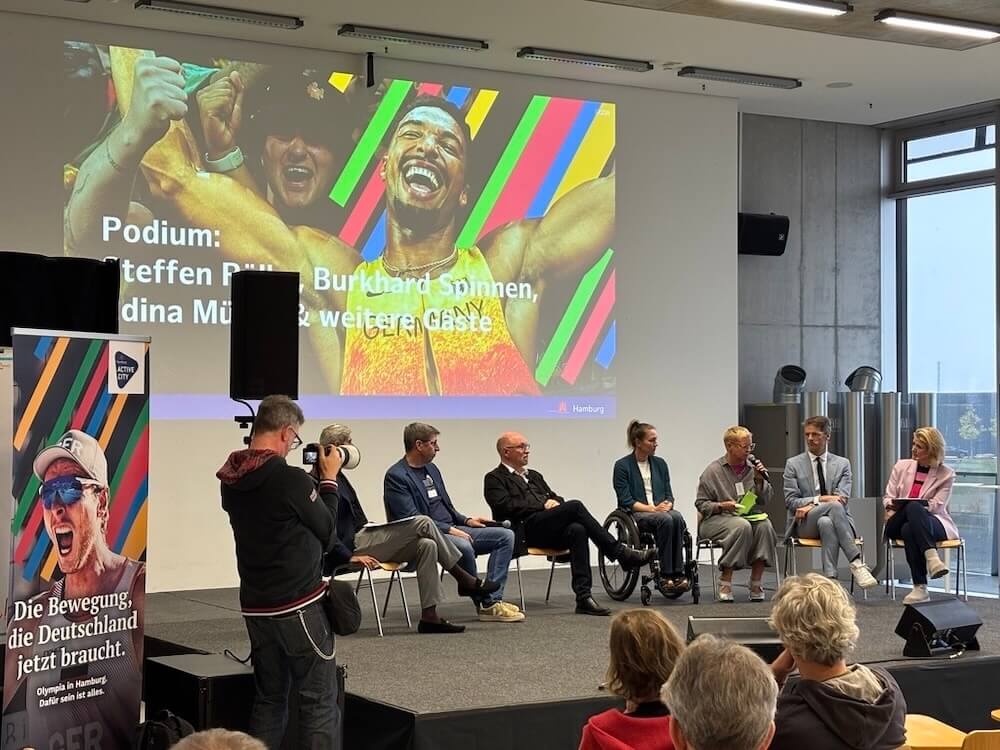
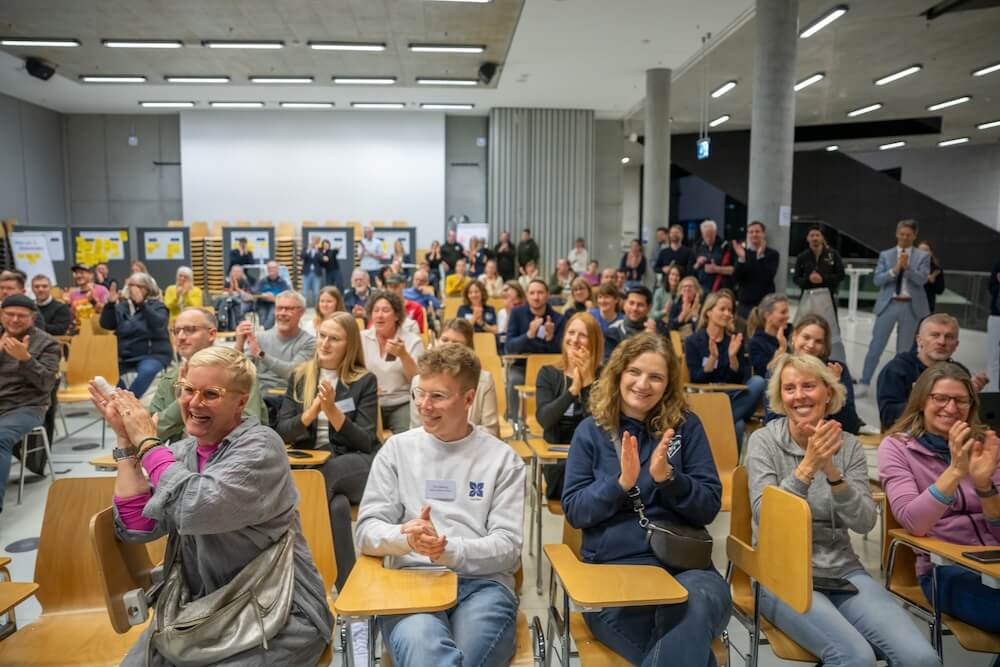
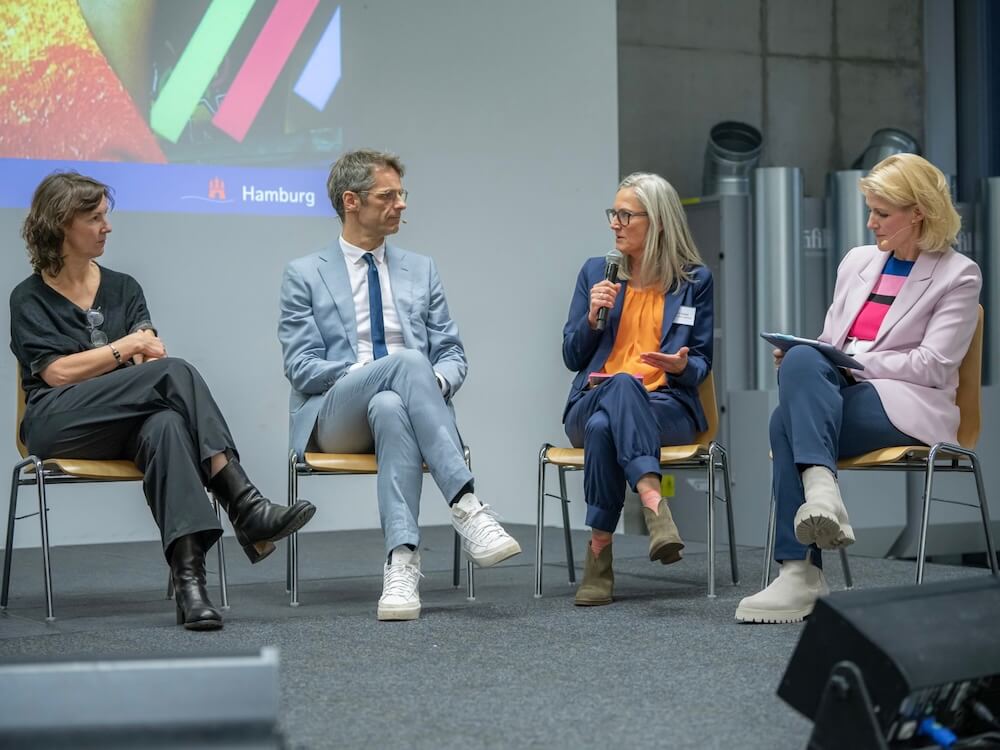
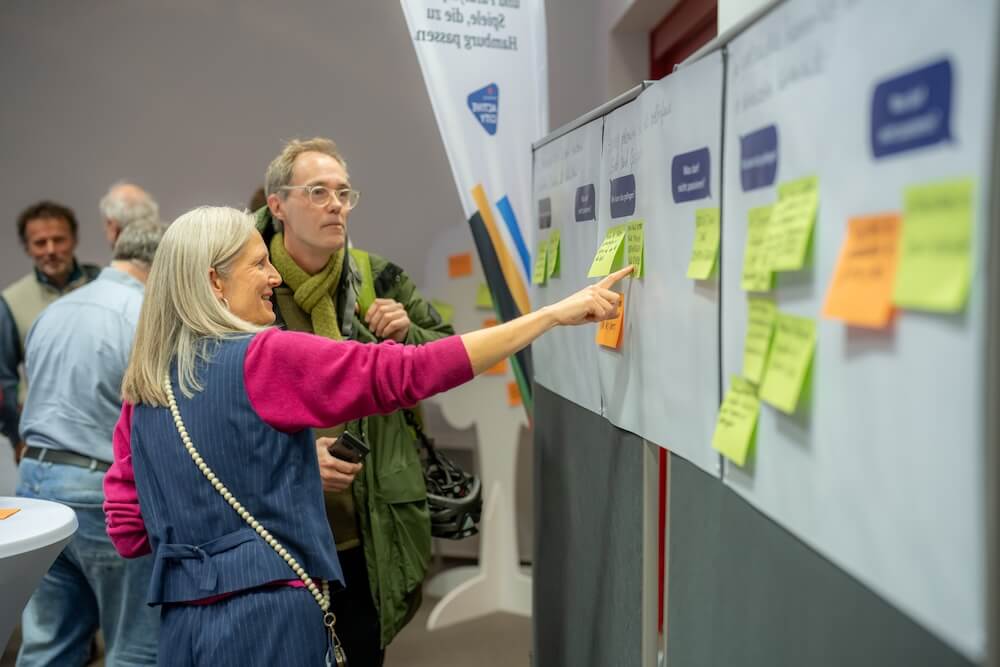
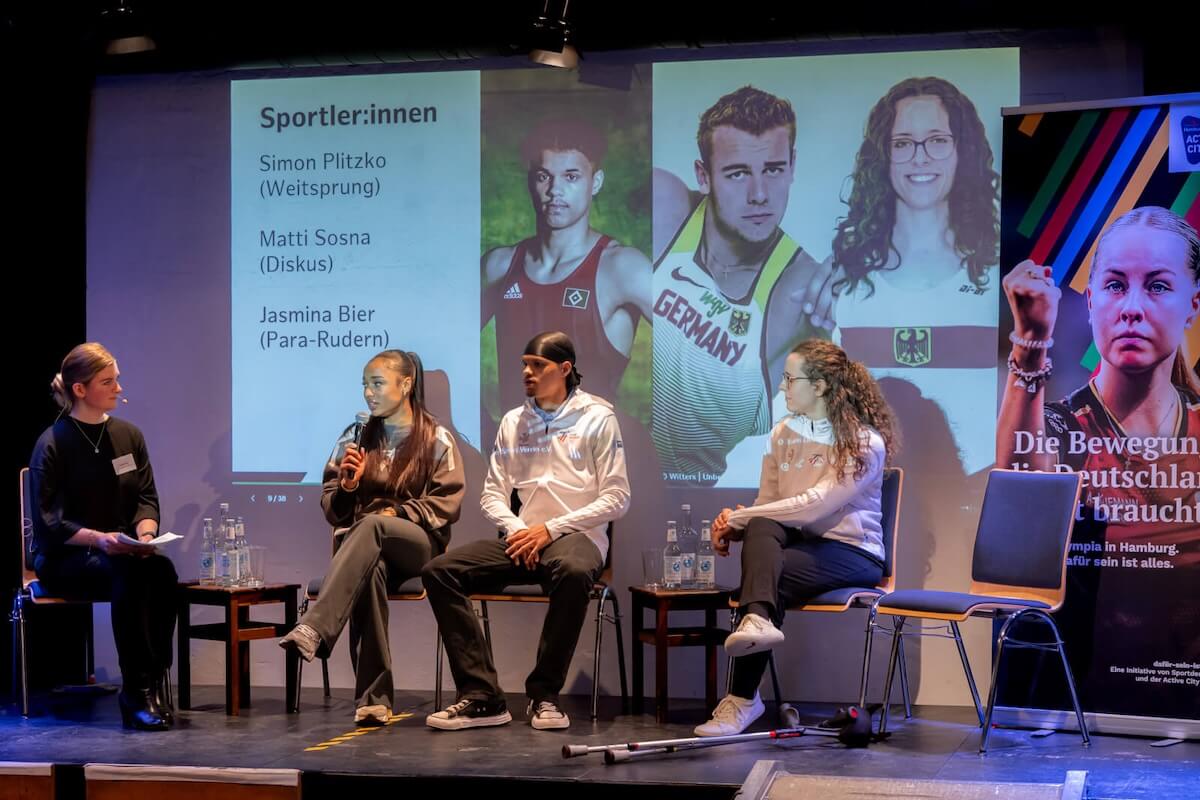
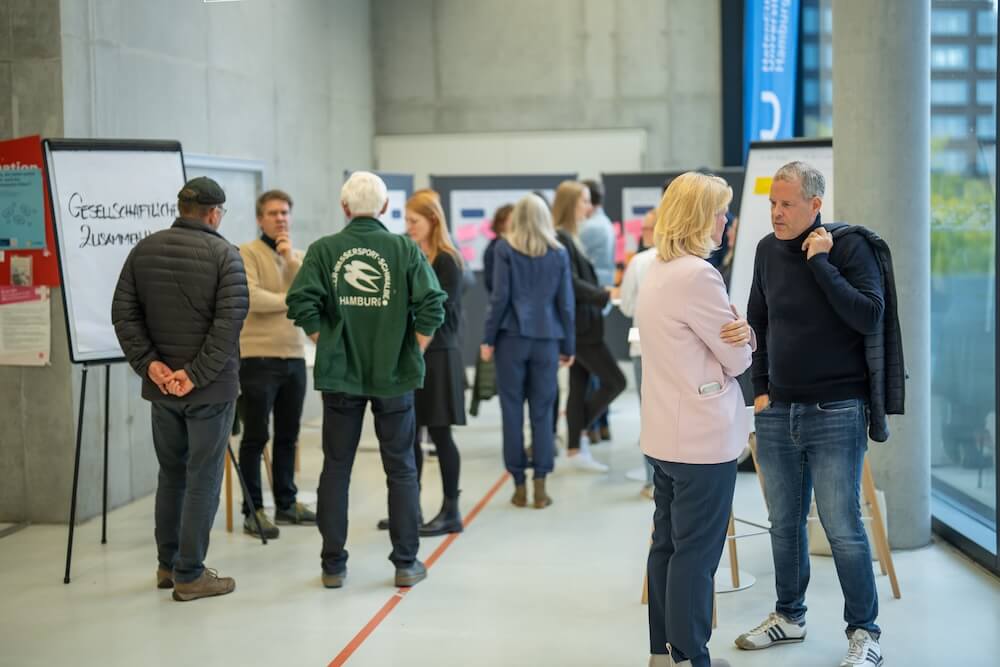
A kickoff event in HafenCity and community dialogues in Hamburg’s neighborhoods: To promote citizen participation regarding the Olympics in Hamburg, we combined and implemented various Stage 2 formats © Muhme Photography
Step 3: Get Involved
Level 3 describes an even more active form of participation—with the goal of taking into account the opinions of various stakeholders. Examples offormats and methods for this high level of participation include:
- Roundtable: Representatives from various interest groups come together to network and develop solutions to shared challenges. This format is often used in conflict-ridden situations—since it not only brings stakeholders into the open but also leads to binding outcomes.
- Focus groups: This term refers to a moderated group discussion on a specific topic. The method originated in market research, where it is used to test products and advertising strategies. In the context of urban development, focus groups are used to gather different perspectives, for example, on a new waste management concept. However, the small number of participants reduces the representativeness of the results.
Example: Hamburg’s Roundtable on Nightlife and Neighborhoods
The topic of nightlife gives rise to many conflicts—especially with local residents. To ensure these issues are openly addressed and resolved collaboratively, the City of Hamburg established the “Nightlife & Neighborhood” roundtable, which we designed and implemented.
In the run-up to the initiative, we identified relevant stakeholders from government, the nightlife sector, tourism, the local community, and civil society, and literally brought them together around one table. In addition, we organized working groups (WGs) to address specific points of conflict.
The result: The WGs agreed on initial joint implementation steps, such as communication measures. Furthermore, the regular meetings facilitated an ongoing exchange that fosters understanding and trust among the stakeholders.
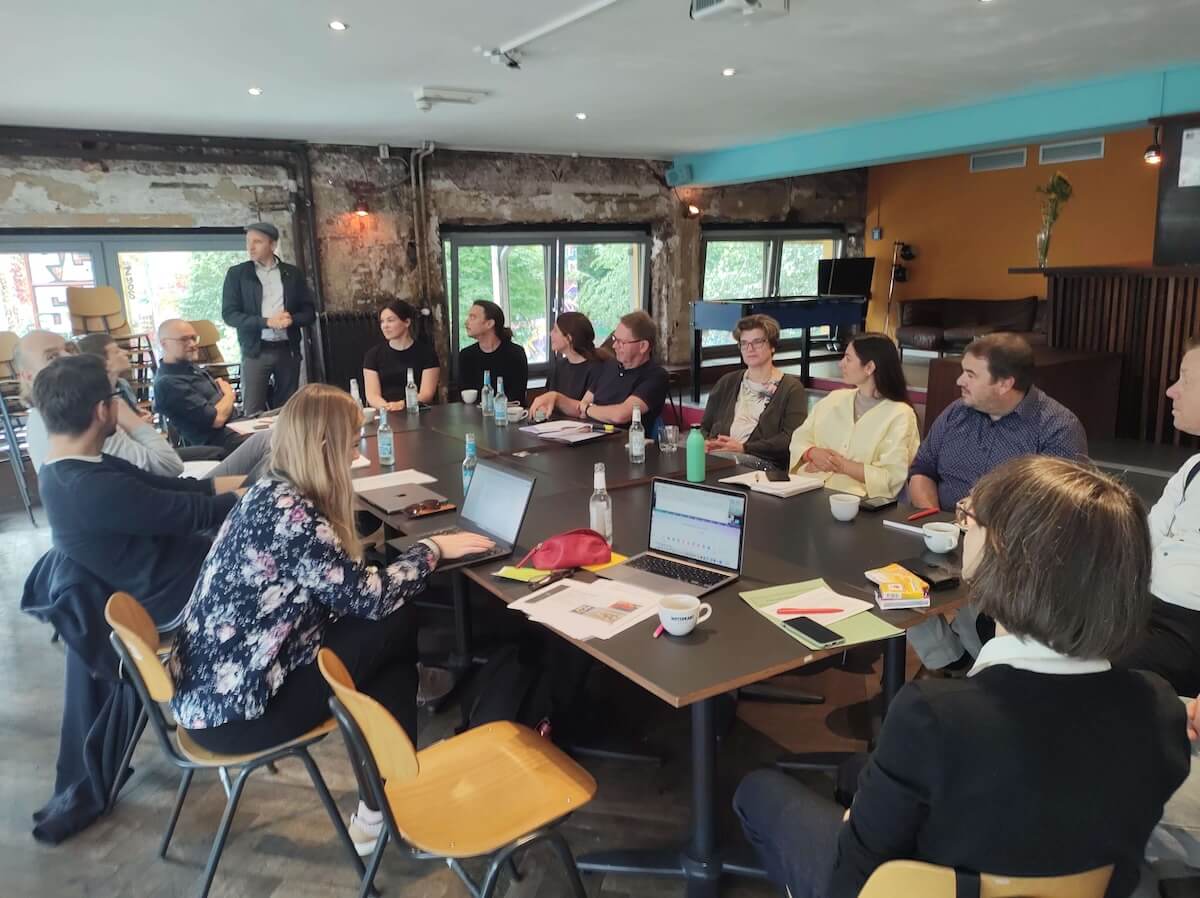
The “Communication” Working Group at work around the (square) roundtable—the City of Hamburg uses this format to encourage citizen participation
Level 4: Participating in Decision-Making
The highest level of citizen participation is achieved when citizens have a say in decision-making. For selected local matters, the administration can delegate binding decision-making authority—and thus responsibility—to citizens. In doing so, the administration assumes an advisory and supportive role.
However, not every issue is suitable for Level 4 formats such as participatory budgeting, referendums, citizen committees, or neighborhood funds. Co-decision-making is often possible when local interest groups are represented on an advisory board and that board has access to funding from a fund. For example, the advisory board brings together residents, restaurant owners, and shopkeepers, who vote on which projects, local initiatives, and events will receive funding from the fund. This empowers stakeholders to participate in decision-making, and other local actors can help shape their community through this funding.
Best Practices in Bad Reichenhall: 3 Steps to Successful Participation
These four steps lay the foundation for successful citizen participation. In addition, the following steps are key to a successful participation process:
- Identify stakeholders early on.
- Tailor the content of the participation to the stakeholders
- Communicate the expectations and goals of the participation process
The development of a digital land-use management system for the city centre in Bad Reichenhall illustrates how this works: Many stakeholders come together in the city centre. To ensure their perspectives and ideas are heard, we organized a week of activities. During this week, an information session, city walks, and workshops offered citizens and stakeholders the opportunity to participate.
3 Steps to Successful Citizen Participation
Step 1: Identify stakeholders early on
It’s important to have an overview of who is already shaping the city centre, which perspectives are missing, and how these can be brought into the conversation. Targeted one-on-one conversations help identify and engage stakeholders.
To get a good overview, we created a stakeholder map well in advance of the activity week . It shows all stakeholder groups and continues to grow as the project progresses.
Step 2: Tailor the content of the engagement to the stakeholders
In addition to an informational event and city walks as low-threshold entry points, we organized focus group workshops .
The workshops allowed us to address the varying levels of knowledge among the stakeholder groups in a targeted manner. This is because, depending on their field of expertise, the participants bring different experiences to the table. Stakeholders from the public administration often have different pain points than those from the tourism sector. That’s why we tailored the workshops to each stakeholder group, allowing us to delve more deeply into the respective topics.
Step 3: Communicate Expectations and Goals for Participation
When people participate, many different expectations come into play: Participants come to the event with their own hopes and wishes. We enter the process with our own goals. Our client on site also has their own ideas.
To ensure that expectations don’t diverge too widely and to prevent misunderstandings, we communicate the goals of events right in the invitation. For the informational session, for example, the goal was stated as creating a shared knowledge base.
The goal of the expert dialogues was to jointly formulate four to eight specific measures, follow up on them, and report transparently on their progress . This made it clear from the outset what each stakeholder could contribute and what the next steps would be.
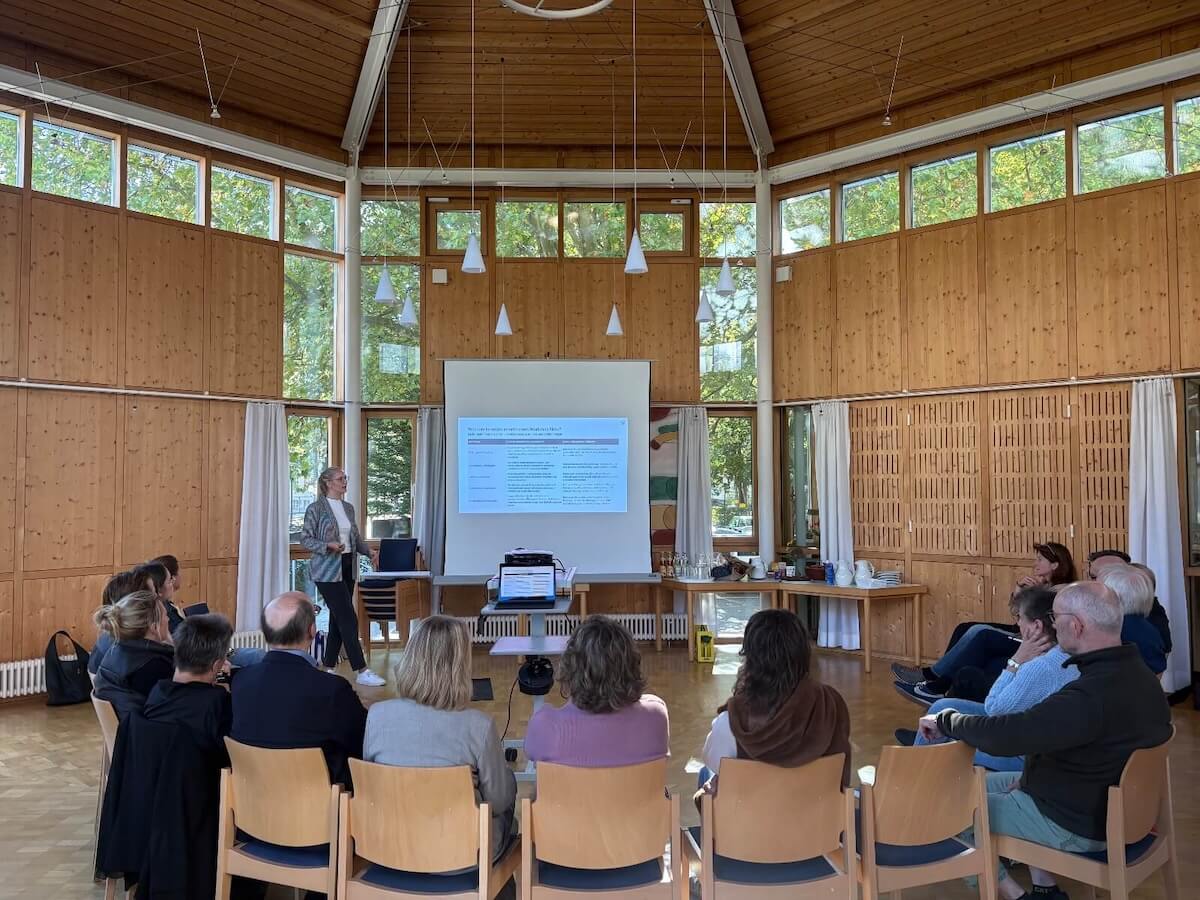
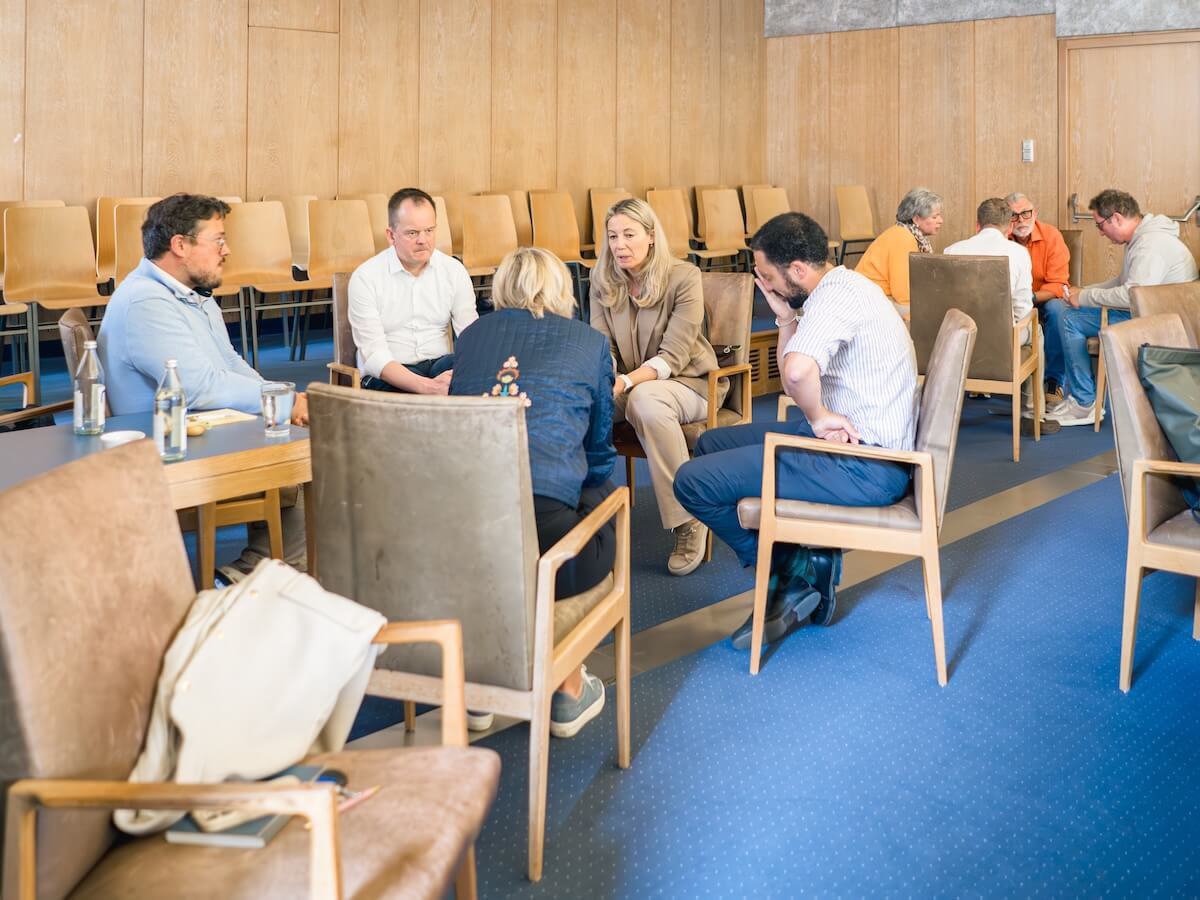
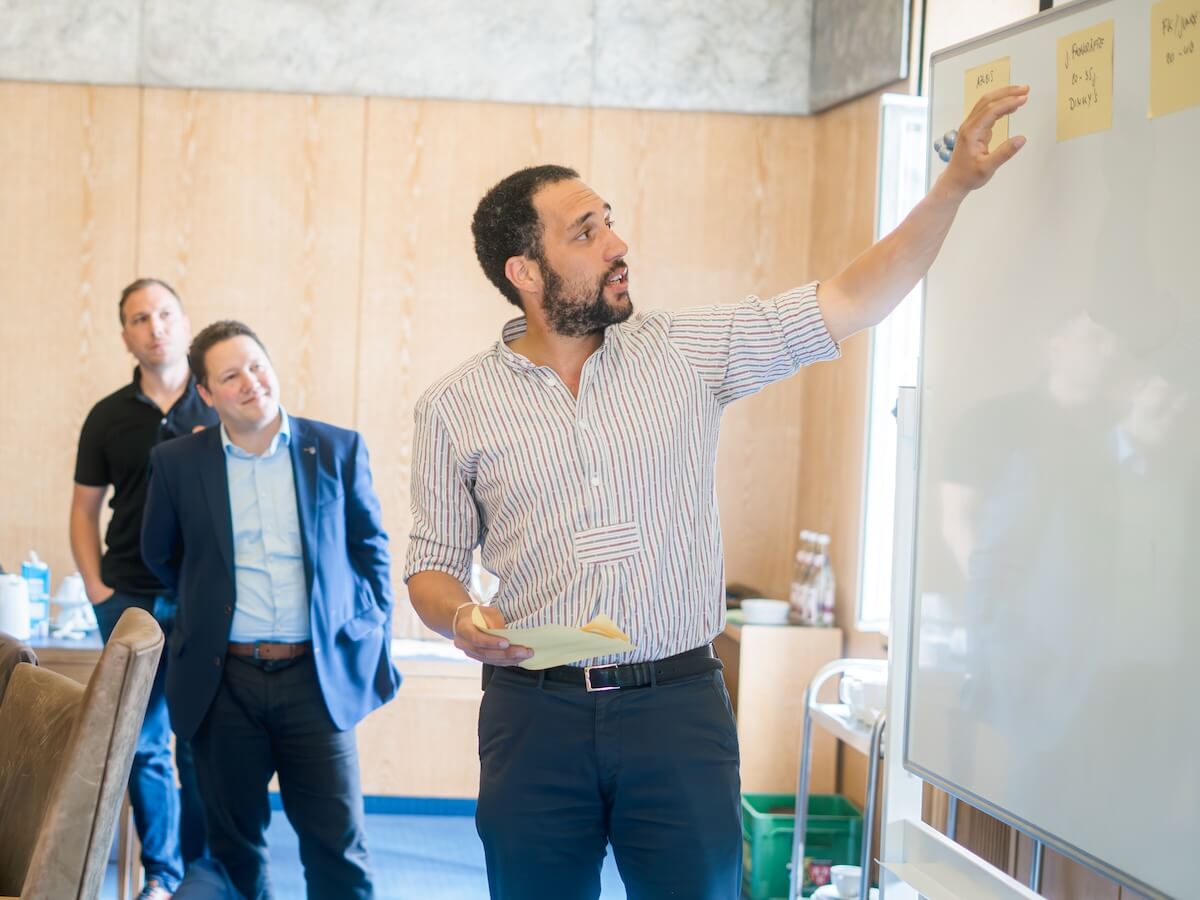
To ensure we addressed the needs, ideas, and scope for action of the various stakeholder groups, they were invited to Bad Reichenhall for customized workshops © (Photos 2 and 3) Anna Gruber, Bad Reichenhall Tourism and Place Marketing GmbH
Participation Week facilitated dialogue with many stakeholders and provided new points of contact. To achieve this, it was particularly important to have an overview of the stakeholders, to address their varying levels of knowledge, and to manage expectations.
Good Turnout with a Strong Partner
Transparency Note: The activity week took place as part of the funded project “Strong Place Marketing for Vibrant City Centres 2025.” Bad Reichenhall Tourismus und place marketing GmbH (BRM) is not merely the commissioning party.
It is familiar with the local people and issues, facilitates contacts, and provides guidance for planning. For the activity week, BRM supported on-site communication and maintained contact with local stakeholders.
BRM is thus an active local partner. BRM’s local knowledge and experience were a key component of every step of the participatory process.
Conclusion: Successful investments do not shy away from dissenting votes
Successful participation does not mean, however, that there are no dissenting voices when decisions are made:There will always be stakeholders who benefit more from a decision than others.
Successful participation, rather, involves engaging precisely those stakeholders with differing opinions. This creates a space for concerns and dissenting voices, which contributes to constructive and transparent decisions.

Finnja Korn
jongliert gerne mit Worten und Ideen rund um urbane Räume. Ihr Studium in Urban Design an der HafenCity Universität ist dafür das beste Spielfeld.