CONTENT
The big question: What exactly is good place marketing?
How often do I get asked: What are some current examples of good place marketing? Which initiatives work? Where can we start? And to be honest: What actually constitutes a good place marketing project?
Even though cities face similar challenges—such as funding, social changes, and shifting consumer behavior— the situation is different in every city. There are many reasons for this, including: different organizational structures (for example, as a limited liability company or integrated into the municipal administration), different areas of activity, different stakeholder structures, varying political majorities, and a more hands-off approach on the part of the city.
Successful place marketing , therefore , cannot always be measured by the numbers. What works in Bad Reichenhall is by no means guaranteed to be a success in Bitburg. The key is to understand your own city and its challenges, keep its strengths in mind, identify opportunities, and capitalize on its potential.
Abstract:
In Bitburg, hops grow on park benches; in Reutlingen, more than 400 people have written a love letter to their city. Using five examples from German cities, Laura Ebeling explains how she recognizes effective place marketing and how cities can determine whether an idea is a good fit for them.
Place marketing has changed, and so have the requirements
Place marketing has undergone a dramatic transformation in recent years. In the past, many organizations placed a strong emphasis on events or the city centre. However, as conditions continue to change, an increasing number of issues are emerging that place marketing is taking on and actively helping to shape.
When we at Stadtmanufaktur begin an analysis of the current state of place marketing, we typically delve into various topics:
- What is the strategic framework?
- Is there a place brand strategy, a city strategy, or even a distinct positioning for the city?
Next, we’ll take a look at the areas of activity in place marketing, as described by the Federal Association of City and Urban Place Marketing in Germany (bcsd):
- Where does the organization itself operate?
- Which tasks are handled by other entities? Classic areas of overlap here include, for example, economic development and administrative marketing.
We’ll also examine collaboration, interfaces, and communication:
- How does this work within the organization, with the administration, and with other institutions and partners?
- What topics are prioritized, which channels are used, and how are these actively managed?
Of course, human and financial resources are also important, not to mention impact analysis in the form of KPIs: How does the place marketing department plan to measure its success?
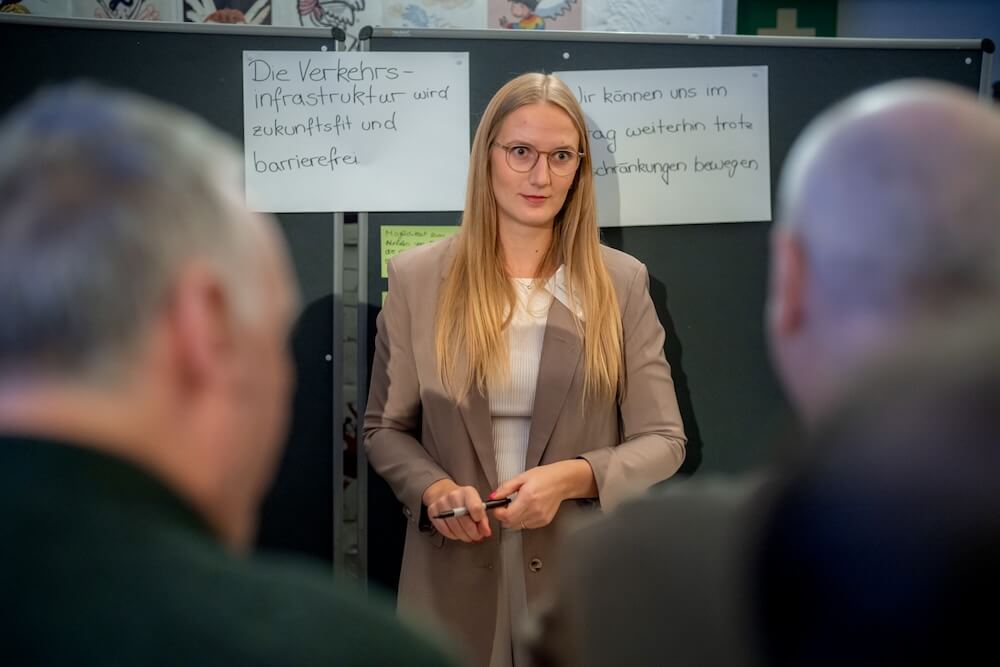
At the same time, place marketing must always keep its own scope of action in mind. If we know that certain topics are off the table, we have to ask ourselves where we can still make a difference. Then we continue to focus on the topics where we expect greater success and a greater impact.
5 Approaches, 5 Cities: Real-World Examples of Place Marketing
Even though the solution is different for every city, there are , of course , approaches— in addition to such analytical frameworks —that can help any place marketing initiative become more successful. That’s why I’d like to discuss five topics, some of which are sure to add value for you as you move forward.
In my opinion, these are the initiatives and place marketing projects that are currently worth taking a look at:
- A strategic framework provides direction —Example: Bielefeld
- Place marketing is the curating spider in the web —Example: Münster
- Place marketing can be bold —Example: Reutlingen
- Sometimes small things have a big impact —Example: Bitburg
- The premier league: letting people take the lead – Example: Chemnitz
1. A strategic foundation provides direction
In these ever-changing times , it is crucial to have a strategic foundation on which we can base our actions—ideally in the form of placing brand strategy.
A brand provides a substantive framework that builds on the city’s identity and aligns its development with its own areas of strength. It helps us set priorities, make decisions, and avoid chasing every new trend. After all, the crucial question is: What truly suits our city, and what do we want to stand for in the future?
An interesting real-world example is Bielefeld:
Bielefeld has consistently aligned its place brand strategy with its own strengths. Rather than attempting to communicate the city’s full diversity all at once, Bielefeld focuses on selected core themes that were identified based on a brand analysis and input from the city’s community.
The place brand strategy thus not only forms the basis for campaigns but also provides a framework for the city’s entire communication efforts. At the same time, partners and the local community are actively involved, ensuring that the brand is not the sole responsibility of the place marketing department. Bielefeld Marketing communicates the brand development process transparently on its website.
2. Place marketing is the curating spider in the web
Unlike a traditional specialized department, place marketing does not operate solely along a single specialized line of work, but rather brings together different topics, perspectives, and stakeholders. That is precisely what makes place marketing the “spider in the web.”

Perspectives, Projects, Partners: Like a “spider in its web,” the place marketing department pulls all the strings
The goal is to keep everything on track, identify common interests, and bring people together to work. Not every project has to be carried out by the place marketing department itself. Sometimes it’s much more important to to bring the right partners together, initiating processes, and supporting developments.
At this point, it’s worth taking a look at Münster:
Münster Marketing collaborates with various alliances and networks, such as those involved in city management or the Alliance for Science. Together with the economic development agency, the retail sector, the academic community, and other partners, we advance urban development initiatives.
For me, what’s exciting isn’t any single project, but rather understanding our own role: In Münster, place marketing creates structures for collaboration and ensures that different stakeholders can work toward common goals.
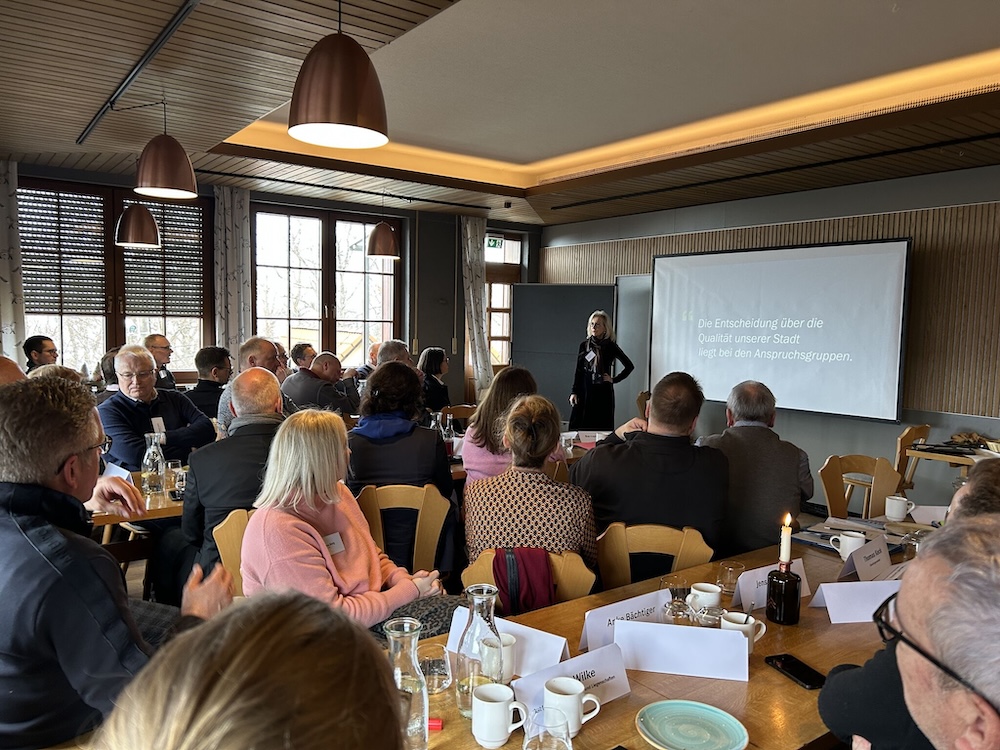
Bernadette Spinnen, director of Münster Marketing, also helps other cities weave their own networks—here at an event in Reutlingen
3. Place marketing should be bold
Despite the many threads involved, place marketing also has the freedom to be bold. We’re allowed to shake people up, we’re allowed to try new things, and we’re allowed to think innovatively— things that government agencies often struggle with due to their structures and operating conditions .Not every idea has to appeal to everyone right from the start. Sometimes it takes an unconventional approach to break out of entrenched ways of thinking and spark a fresh discussion about our own city.
One of the best examples for me right now is the campaign “You can’t just like Reutlingen. You have to love it.”
Reutlingen’s place marketing campaign, “Just Love,” caused quite a stir with its very bold first phase: Posters were hung throughout the city listing reasons why one couldn’t love Reutlingen.
Suddenly, Reutlingen didn’t seem nearly as bad as it might have seemed before. People discussed, argued, and defended their city. When the reveal finally came and the love stories about Reutlingen were unveiled, it gave rise to a whole new sense of connection to the city.
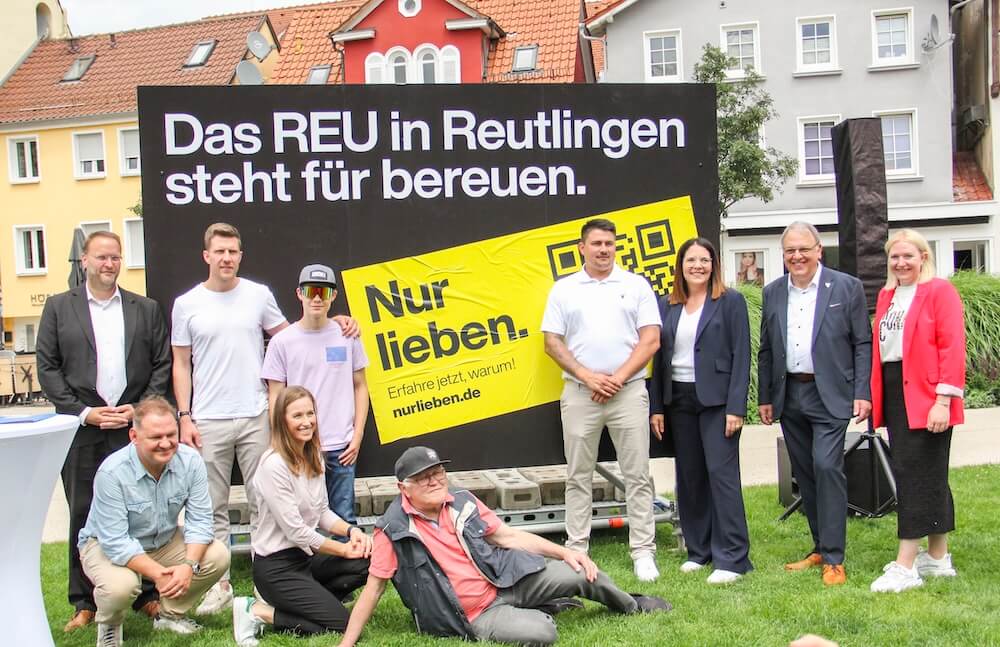
StaRT Managing Director Anna Bierig and Lord Mayor Thomas Keck (from right) with team in front of a poster of the Nur-lieben campaign in Reutlingen. With a lot of self-irony, the campaign has been radiating inwards – and outwards – since 2024 © StaRT
A campaign that I found very bold, one that managed to lift people out of the negative mindset that often sets in during these, unfortunately, somewhat difficult times.
What makes it special: The campaign not only garnered nationwide attention in Germany but also gave people a voice. More than 400 personal declarations of love for Reutlingen were collected. In addition : merchandise, a music video, an interactive heart… And the campaign even gave rise to a long-term city brand.
To me, this example shows what’s possible when place marketing deliberately pushes boundaries and connects with people on an emotional level.
4. Sometimes small things have a big impact
Not every initiative has to immediately attract nationwide attention. Sometimes it’s the small, quick actions that can have a big impact.
Especially in times of tight budgets, it doesn’t always have to be the big projects. Often, we can bring about visible changes with modest resources. What matters most is that these changes are tailored to the city and its challenges.
Bitburg is a good example of this:
As part of the downtown marketing initiative and climate protection efforts, it became clear that Bitburg needs more greenery and a more inviting atmosphere in its city centre . So, the planted benches to be purchased weren’t simply adorned with just any plants. Instead, so-called “hop islands” were created, featuring hops among other plants.Hops contribute to the city’s identity and its brewing culture, and may even bring a small smile to the faces of people who treat themselves to a short break and rest on a bench.A small initiative that combines several goals: more greenery, a more pleasant environment, and, at the same time, making the city’s identity visible in public spaces.
5. The Ultimate Approach: Let People Do It Themselves
For me, participatory formats are the gold standard. Place marketing departments generally don’t lack their own creative ideas and projects. Collaborating with partners to bring ideas to life is also often a well-established and effective process. But how do I get the city’s residents to get involved themselves? How accessible do initiatives need to be so that the average person on the street doesn’t just voice an idea, but actually puts it into action?
We talk a lot about participation. Surveys, workshops, and public dialogues have become part of everyday life in many cities. But often, the actual implementation ends up falling back on the administration or place marketing. For me, therefore, true participation begins when people are not just asked for their input, but are able to take responsibility themselves.
Chemnitz demonstrates this through its microprojects:
Since 2017, microprojects have enabled individuals, organizations, and initiatives in Chemnitz to propose their own ideas and bring them to life with financial support. Initially, the focus was on the 2025 Capital of Culture year, but the successful program continued afterward.
A preliminary assessment: So far, around 250 microprojects have been funded in Chemnitz. The goal was not for the city to develop every project itself. Rather, it created a framework within which people could bring their own ideas to life.
That, to me, is precisely where a great opportunity lies for place marketing: We don’t always have to come up with the most creative ideas ourselves. We need to inspire people to get involved in shaping their city and give them the opportunities to do so. This involves not only funding and space, but also accessible points of contact, straightforward permitting processes, and—above all—a willingness to delegate responsibility.
Conclusion: So what makes for good place marketing?
Perhaps the answer to my initial question isn’t complicated at all: Good place marketing doesn’t always have to involve developing the biggest campaign, organizing the most events, or generating attention across Germany. It’s much more important to understand your own city, have a strategic framework, bring people together, boldly try new approaches, and get the city’s community actively involved.
And above all: As a place marketing department, it’s important to know your own capabilities and to make the most of them. What has worked in another city may also work in your city—or it may not. What matters is what we learn from this for our own city and how we manage to make a real difference here.

Laura Ebeling
Laura is project manager for city brands and city marketing. Her home town? The green, liveable Braunschweig.