CONTENT
A Bridge, a Vision, and the Question of Funding
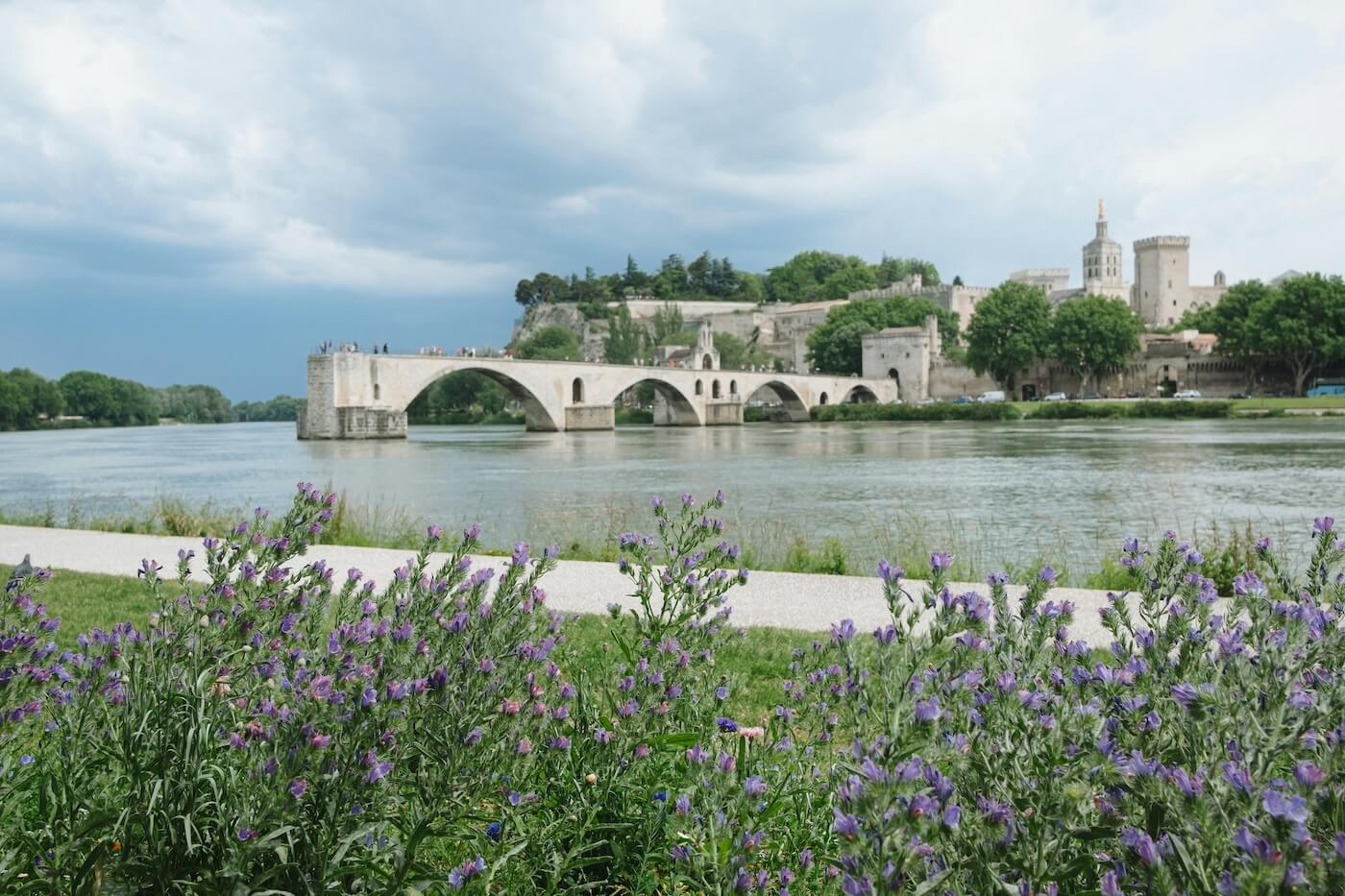
“Sur le pont d’Avignon, on y danse, on y danse …” Who doesn’t know these lines about the legendary Bridge of Avignon? But the bridge would probably never have been built if it hadn’t been for a young man named Bénézet. He had a vision, found like-minded people, persistently built networks, and founded a bridge brotherhood to raise funds for its construction.
From a single person’s idea emerged a project that had a lasting impact on Avignon’s development: Without this commitment, Avignon might never have developed its importance as a trading city ; instead , horse-drawn carriages would have crossed the river at Arles with their goods , Avignon would not have collected tolls, might not have become the papal city, and would not have developed into the international cultural and festival city it is today.
This historical example shows: Individual people can provide crucial impetus for a city’s development, aHowever, going it alone is rarely successful. The key is is whether we can succeed in recruiting allies, mobilizing financial resources, and creating sustainable structures for implementation.
This is where the concept of the Urban Fundings comes into play: It views financing not as an isolated search for sources of funding, but as a building block of strategic urban development. Urban Funding broadens the perspective beyond traditional municipal financing and asks questions such as: What goals are we pursuing, which projects contribute to them—and what urban structures do we need to ensure a successful synergy of efforts?
Abstract:
Tight budgets and a growing workload are limiting the scope of action for many cities. In response, Isabell Köster developed the concept of “urban funding” for Stadtmanufaktur. In this article, she explains how local governments can strategically combine financing, partnerships, and governance to mobilize additional resources and maintain their capacity to act in the long term.
When responsibilities grow and the room to maneuver shrinks
In 2025, German municipalities recorded a new record deficit of just under 32 billion euros (Source: Federal Statistical Office). Rising expenditures on social services, personnel, and infrastructure are outpacing revenue growth.
Through our collaboration with place marketing organizations, urban planning departments, and economic development agencies, as well as mayors and leaders in government and politics, we see firsthand the financial strain facing local governments. The tasks are becoming larger, more complex, and more urgent—while the financial and organizational leeway is shrinking. The pressure mounts as reserves are depleted. Voluntary services are the first to be called into question, while at the same time the demands for sustainable urban development are growing: creating or maintaining infrastructure, revitalizing the city centre, fostering culture, engaging children and youth, implementing climate adaptation measures, and strengthening education. The list of municipal tasks goes on and on.
One thing is clear: Not every project is on the scale of a bridge over the Rhône. Taken together, however, all these investments determine whether a city can maintain its quality of life, remain economically attractive, and stay ahead in the competition among cities—a competition that has always existed and always will.
Reacting vs. Shaping
Many municipalities have now become true experts at tapping into various sources of funding: Their own revenue from taxes, fees, and municipal enterprises is supplemented by funds from state, federal, or EU grant programs, loans, and partnerships with private entities and foundations. But this comes at a price:
Grant funding is usually earmarked for specific purposes, time-limited, and involves matching funds, a time-consuming application process, and extensive documentation. The involvement of partners carries the risk of creating dependencies down the line. Consequently , projects are developed based on available programs rather than stemming from an overarching urban strategy. At the same time, potential remains untapped because responsibilities are fragmented among departments, agencies, and external stakeholders. As a result, there is often a sense that we are reacting rather than shaping the future.
Urban Funding: Financing as Part of Urban Strategy
Against this backdrop, an approach is gaining importance that does not view financing in isolation but rather as part of strategic urban development: We call it “Urban Funding,” drawing on the international—and particularly Anglo-Saxon—discourse. This is because no comparable, widely used term exists yet in German-language urban discourse.
Urban Funding encompasses practices, strategies, and tools that cities can use to mobilize and deploy additional resources. While traditional municipal financing focuses on budget structures, revenue and expenditure logic (such as the principle of connectivity), legally compliant use of funds, and fiscal stability, urban funding broadens the perspective and asks not “Where do we get money from?” but rather “How do we ensure our city’s capacity to act in the long term?”
Definition: Urban Funding?
Urban funding refers to a strategic approach to city financing that enables cities to mobilize, pool, and strategically allocate additional resources for their development. It is based on a city’s long-term goals and all projects that contribute to them.
Urban Funding combines public funding mechanisms, private and civic engagement, and strategic partnerships. It supplements municipal financing but does not replace the municipality’s responsibility for essential public services such as public utilities, schools, or social infrastructure.
City and Brand: Strategic Partnership Between Innsbruck and VAUDE
Innsbruck Tourism and the sporting goods manufacturer VAUDE have been in a strategic partnership since March 2025 to promote sustainable outdoor sports and responsible tourism. VAUDE is the exclusive outdoor partner of Innsbruck Tourism: In photo and film productions, the participants wear VAUDE gear, while VAUDE prefers to shoot its own productions in the Innsbruck region.
Joint communication initiatives and marketing campaigns highlight the values of both brands, expand their reach, and strengthen the region’s positioning as a sustainable alpine-urban outdoor destination. An obvious match for both partners—and fully in line with a holistic approach to place branding for the city of Innsbruck: The collaboration includes sponsorship and co-branding elements, but goes beyond them. Both partners contribute resources, reach, and credibility and work toward a shared narrative for the city.
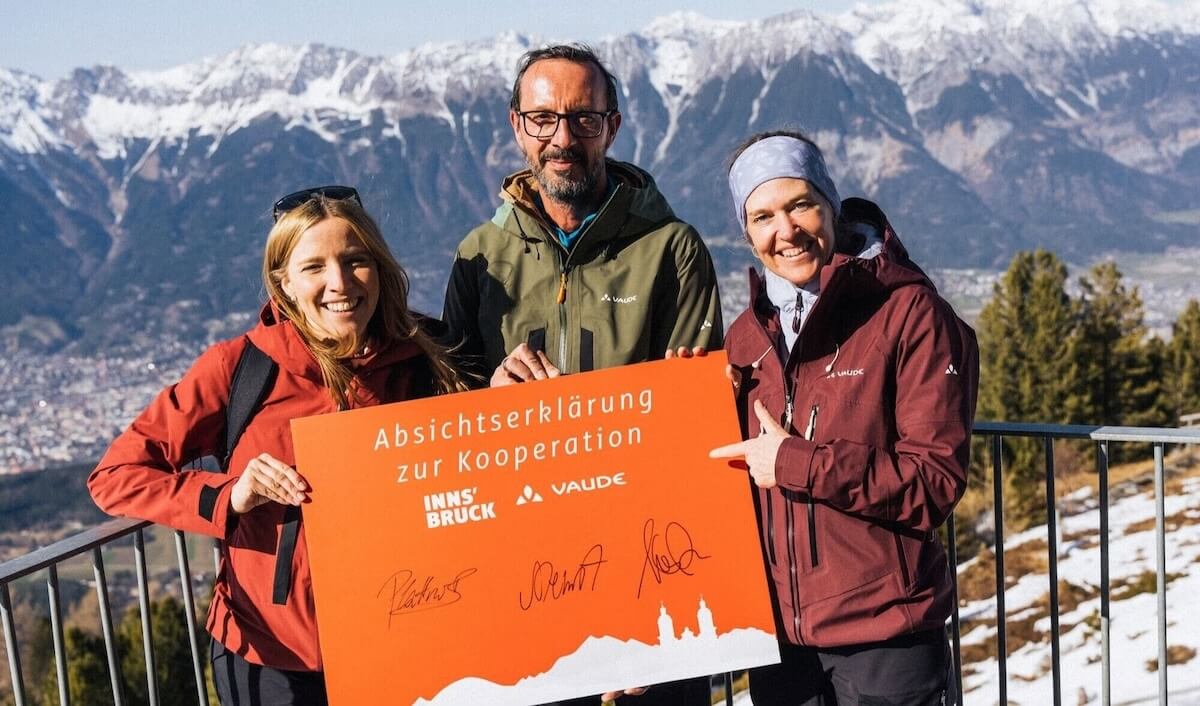
“Letter of Intent for Cooperation” against an Alpine backdrop: Barbara Plattner (Managing Director of Innsbruck Tourism), Peter Paul Mölk (Chairman of Innsbruck Tourism), and Antje von Dewitz (Managing Director of Vaude) © Michael Venier
Bureaucracy and Complexity: Why Cities Are Often Difficult Partners
Such strategic partnerships between cities and brands have so far been the exception in German-speaking countries. According to Bettina Berger, managing director of the S20 Sponsors’ Association, fatigue is setting in on the corporate side: Lengthy coordination processes, unclear responsibilities, bureaucratic procedures, and uncertainty about what is legally and politically feasible make collaboration difficult even when there is a fundamental interest in it.
At the same time, in many places there is a lack of a clear understanding of what a city can offer, what forms of compensation are permissible, and how one-off support can evolve into a partnership that creates added value for both sides. Companies then do not encounter a partner capable of taking action, but rather a complex system in which responsibility and decision-making authority are difficult to pinpoint. This applies above all to the concept of “brand urbanism, ” which is still relatively unknown in this country and in which brands contribute specifically to the development, design, and positioning of urban spaces.. The partnership between the city of Innsbruck and VAUDE is also an example of brand urbanism.
Toolkit: What Does Urban Funding Entail?
- Public Funding and Financing Instruments:
Funding programs from state governments, the federal government, and the EU; subsidized loans, co-financing, and other public grants - Philanthropy and Civic Engagement:
Foundation grants, donations, patronage, crowdfunding, community fundraising, community foundations, as well as monetary, in-kind, and volunteer contributions, etc. - Economic and Strategic Partnerships:
Sponsorship, corporate partnerships, public-private partnerships, and brand urbanism, Business Improvement Districts (BIDs), cooperatives, associations
Which of these instruments is appropriate depends on the city’s objectives, the specific project, the sponsoring entity, and the legal and political framework.
Urban Funding: Rules Provide Security—Structures Enable Action
A first step toward strategic urban funding could be the adoption of binding sponsorship guidelines . The guideline developed in the Darmstadt-Dieburg district, for example, distinguishes between sponsorship, advertising, donations, and philanthropic gifts; defines permissible and prohibited areas of application; regulates decision-making processes; and includes a contract template. In doing so, it provides certainty, transparency, and a common working basis for the administration, policymakers, and potential partners.
However, guidelines alone are not enough. An interagency clearinghouse can review planned projects at an early stage, coordinate legal, tax, and policy issues, identify suitable partners, and provide professional support for collaborative efforts.
Such newly created municipal structures are not an end in themselves, but rather a means to an end. The rapid rise of city centre management initiatives —as well as new roles such as that of the “night mayor” —demonstrates that innovative municipal structures can become models of success capable of both filling existing gaps and tapping into untapped potential. Another example of this:Community foundations , which are now highly regarded , were unknown in Germany until the Bertelsmann Foundationintroduced the model in 1996 was imported from the United States. There are currently about 430 community foundations, with approximately 400,000 people actively involved in them (source: Alliance of German Community Foundations).
Two Best Practices: Urban Funding in Bielefeld and Münster
The partnership between Innsbruck and VAUDE demonstrates the power of urban funding for sustainable and effective urban development and place branding. But German cities, too, are increasingly recognizing how they can implement projects relevant to their cities—with the help of strategic financing and despite challenging budget deficits. Let’s take a look, for example, at two initiatives in Bielefeld and Münster.
Wissenswerkstadt Bielefeld: From City Profile to Funded Key Project
In 2024, the Wissenswerkstadt Bielefeld opened as a meeting place that brings science and urban society together right in the city centre. Spanning approximately 2,800 square meters, it offers space for exhibitions, events, workshops, experiments, and other interactive formats. The goal is to make science and research accessible to the general public and to promote exchange, dialogue, and participation. But how were they able to raise the 15 million euros needed to finance the project?
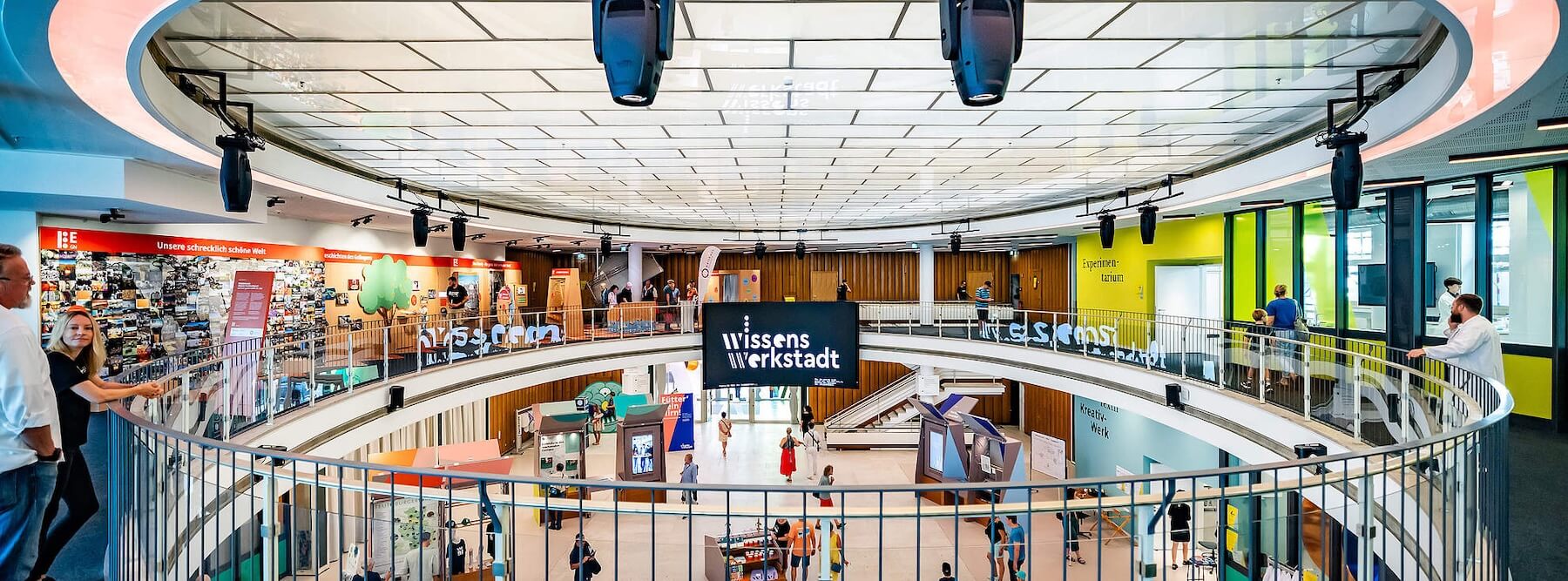
© Wissenswerkstadt/Sarah Jonek
The highlight in Bielefeld: The Wissenswerkstadt was not treated as an isolated, standalone project, but rather as a strategic implementation of the Bielefeld city brand. It raises the profile of science in the city centre, translates the city’s vision of being a “participatory city” into concrete formats for participation and dialogue, and connects location branding with urban development. Bielefeld Marketing It developed the concept in response to a political mandate and involved the city administration, the university, the college, and other partners from the business community and civil society at an early stage. Thanks to this clear governance structure, political support, and its integration into the urban renewal efforts on the northern edge of the city center, the project was able to successfully align with the funding objectives of the state of North Rhine-Westphalia.
Mühlenhof Münster: Fundraising Begins Before the Appeal
The Example of the Mühlenhof Open-Air Museum in Münster shows just how closely public responsibility and civil society stewardship can be intertwined. The nonprofit association operates the open-air museum, which is a defining feature of the city, while the city provides the site at a reduced rate, grants subsidies, and plays a central role in issuing permits and establishing long-term framework conditions. When the sponsoring association When De Bockwindmüel e. V. ran into financial difficulties, the city also faced conceptual, organizational, and financial consequences.
In a process jointly led by the city administration and the association (facilitated by us at Stadtmanufaktur), the first step was to define the vision and profile of the site were refined: In the future, the Mühlenhof will open up more as a “Park for Regional Culture” and position itself as an ecologically oriented educational and community hub. This creates a contemporary, relatable narrative with which people can identify and that strengthens their willingness to support the Mühlenhof both financially and through their commitment. Future funding will therefore rely in no small part on a clear and compelling narrative. In addition to binding service agreements between the city and the club and a transparent reporting system, the plan calls above all for the establishment of a professional fundraising department staffed by full-time employees.
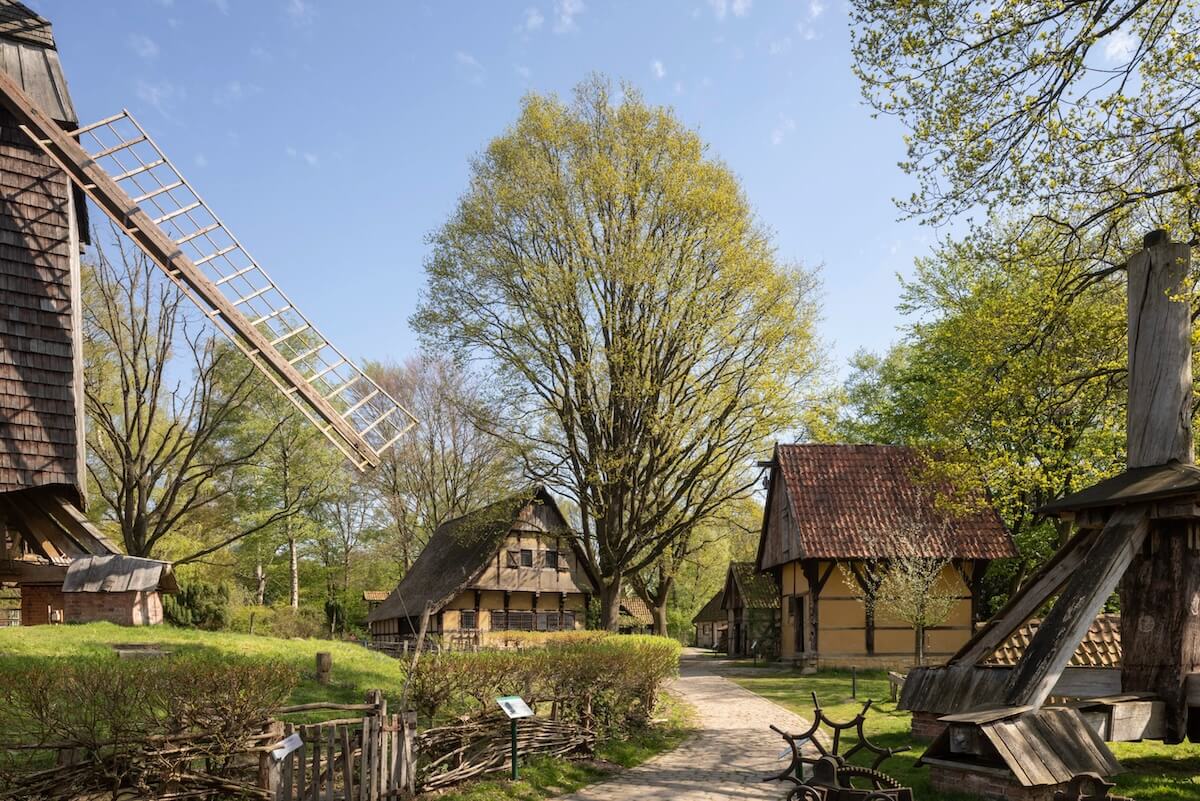
Added Value for Münster: The Mühlenhof Open-Air Museum positions itself as a “park for regional culture” and an ecologically oriented educational and community space for residents © Mühlenhof Münster
How to Urban Funding: Five Principles for Municipal Capacity to Act
Based on these best practices and our project experience, I have developed five principles to help cities establish and manage urban funding—and thereby ensure their ability to act as local governments.

The Limits of Urban Funding—Between Public Responsibility and Democratic Governance
Urban funding must not result in the outsourcing of government responsibilities to a civil society that is often structurally underfunded to begin with. Mandatory tasks, public services, and services that are necessary on a long-term basis (schools, social infrastructure) must remain under public accountability and democratic control. Urban Funding is about using private or philanthropic funds to enhance quality and create greater flexibility—not to mask structural underfunding.
Furthermore, not every important issue is equally appealing to donors. A visible cultural or community space is usually easier to promote than the renovation of a sewer system or the long-term funding of social infrastructure. Eligibility for funding is therefore not the same as public relevance. Political priorities must not be superseded either by the willingness of individual actors to pay or by the logic of short-term funding programs.
Conclusion: Building bridges takes more than just a good idea
Urban Funding doesn’t work financial miracles. But a new approach—one that takes the economic situation into account—helps cities combine the right tools based on a clear strategy, build long-term relationships, and organize decision-making in a reliable way. In this way, sustainable projects can emerge from limited resources—and individual initiatives can give rise to structures that make the next bridge, the next downtown attraction, or the preservation of a cultural association possible.
FAQs About Urban Funding

Isabell Köster
is a project manager specialising in strategic narratives and the cultural industry. Isabell likes to spend her free time swimming - preferably outdoors